Rebel Spotlight: Karen Koepp, Reinvention Strategist
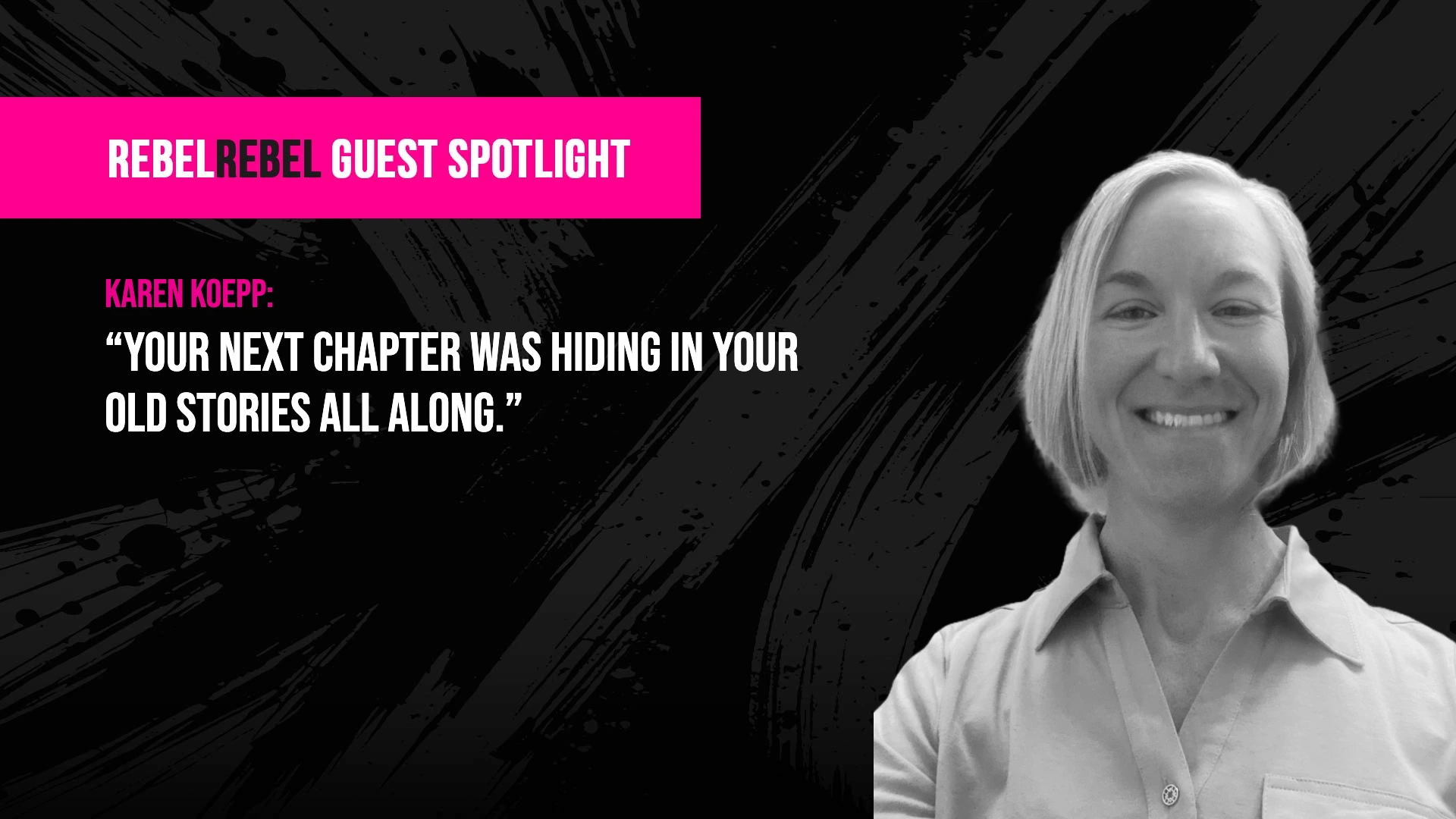
She showed up to our conversation with a black eye.
Not a metaphorical one. An actual shiner, courtesy of a roller skiing wipeout in the Bay Area a couple of days earlier. She'd misjudged a turn on her skis and face-planted on the pavement. And her response, essentially, was to shrug and point out that it was a great metaphor for reinvention.
That's Dr. Karen Koepp in a nutshell. She doesn't avoid the pavement. She lands on it, gets up, and turns it into a lesson.
From Big Four to Burned Out
Karen grew up in Wisconsin, rode horses (her favourite was named Sunny), and did everything you're supposed to do. Good grades, scholarships, internships, the works. She landed a management consulting job at a Big Four firm straight out of college and checked every box on the success checklist.
Something was still missing.
"There was something missing and I wasn't sure what," she told me, "and I had no time to figure out what was what because I was travelling constantly."
So she switched jobs. Burned out and hoping a new environment would fix it. It didn't. She tried other things. Nothing clicked. What followed was a six-year stretch of doing every self-assessment available, volunteering, part-time work, a lot of travel. Six years of looking for the answer everywhere except, as it turns out, where it actually lived.
Eventually, she landed in a master's programme. And the master's thesis nearly broke her.
The Thesis That Started Everything
"The thesis was a different beast," she said. "There was no help to figure out how to do it. And it was just agony for two years."
She'd hand in her work and get it back with feedback that amounted to: try again. So she'd try again. Same feedback. This went on, repeatedly, for two years. (I cannot stress enough how wild it is that "try again" constitutes feedback at the graduate level, and yet here we are.)
At the 11th hour, her second advisor stepped in with just one hour of structured, specific feedback. Things clicked. Karen took the afternoon off, rewrote three of five chapters, and graduated on time.
She thought that was the end of the story.
A week later, her friend Brad called. Brad was brilliant, totally paralysed by his own thesis, and sitting in front of 400 pages of incomplete manuscript with his laptop smashed. Karen dropped everything, flew across the country, and spent three days helping him wrangle the chaos into a complete draft. He graduated too.
"That is when the clouds parted and the light shone and the angels sang," she said. "And I realized there's a market for this."
That was more than 20 years ago.
What a Reinvention Strategist Actually Does
Karen now works as what she calls a reinvention and IP strategist. She works with people at major transition points. Someone who's sold a business, been laid off, hit a ceiling, or watching their industry get swallowed by AI. People who know the current chapter is ending but can't quite see the next one.
Her approach starts with stories.
"The secrets to what's next is in our history," she said. "In those stories of when we've come fully alive. Those times when we're in the zone, in the flow, bringing our best skills to bear, and when we feel like we've really made a difference."
It sounds simple. It isn't. Because the other thing Karen is clear about is that finding a direction is not the solution. She loves citing theorist Peter Block, whose work suggests that if you decide to do something, everything falls into place. Karen's two-plus decades of working with people tells a different story.
"Mission and purpose is not enough," she said. "We can get there. But it's a process."
The Overwhelm Is the Point
Here's the part that I think actually separates Karen Koepp from a lot of people in the reinvention space. She doesn't pretend the hard part goes away once you find your calling. She plans for it.
"The natural next step after that clarity is overwhelm," she said. "Overwhelm is a natural second stage of a mission."
She guides clients through what she calls a readiness retrofit. You identify where the stall is happening. You diagnose it. Then you design systems to move through it. Sometimes that means building in what she calls prosthetic systems. If someone wants to write a book but hates writing, you find another way to extract the content. The genius doesn't require fingers on a keyboard.
Other times it's developmental systems, building skills where gaps exist. Or reward systems, making sure the work doesn't feel like an endless sacrifice with no payoff.
Her master's thesis, fittingly, was on procrastination.
"I wonder why," she said, deadpan.
She's got a genuinely interesting take on it too. Procrastination, in her view, isn't a character flaw. It's a feedback mechanism. A signal that something is out of place. The wise move is to figure out what, not to beat yourself up about it.
Low Stakes Reps and the Long Game
The third phase of Karen's work, the one she didn't get to until near the end of our conversation, might be the most important one. Fulfilling a mission usually requires you to become a somewhat different version of yourself. And that takes time, and practice, and failing a few times in manageable ways.
She calls them low stakes reps. Little experiments, tried in the direction of the new vision. Each one builds evidence. The evidence shifts your beliefs. The beliefs enable new behaviour. The new behaviour builds the new future.
It's not magic. It's not a single moment of clarity. It's a process, and Karen Koepp has spent two decades learning how to guide people through it.
The Bolivia Moment
During the long stretch when Karen was still trying to figure out her own next chapter, she found herself in Bolivia, accompanying a travelling nurse to an indigenous community on the outskirts of town. Big mud puddles, tarps, lots of people, not a lot of material comfort by any Canadian or American measure.
"What struck me most was the joy and the smiles," she said. "They were not thinking about what advanced degree they were going to get or what their career was going to be or when they were going to buy a house."
Just connection. Just being alive together.
It's the kind of moment that travels with you. And for Karen, who now splits her time between Los Angeles and Utah and hikes and mountain bikes and roller skis across pavement at inadvisable angles, it clearly still does.
What Makes Her a Rebel
Karen Koepp spent six years lost before she found the work she was born to do. She didn't take a shortcut. She didn't rebrand herself overnight. She lived through the agony of the thesis, the spectacular failures, the "try again" feedback loop, the friend with 400 pages and a smashed laptop, and she built something real out of all of it.
She describes herself as a strategist and a mountain wanderer. That tracks. She's someone who moves toward hard terrain on purpose, whether that's a difficult client stall, a Utah ridgeline in October, or a roller skiing turn she slightly misjudged in San Francisco.
She told me the advice she gives rebels who are waiting to make their move: start uncovering your stories. Don't be surprised by the overwhelm. And know that the mission will ask you to grow into it, not just step into it.
That's good advice. Coming from someone who earned it the hard way, it lands differently.
Catch the full conversation with Karen Koepp on The RebelRebel Podcast and hear the whole story, including the black eye, the thesis, and why procrastination might actually be trying to help you.
This article is based on
From Overwhelm To Action With Karen KoeppAbout the Author: Michael Dargie
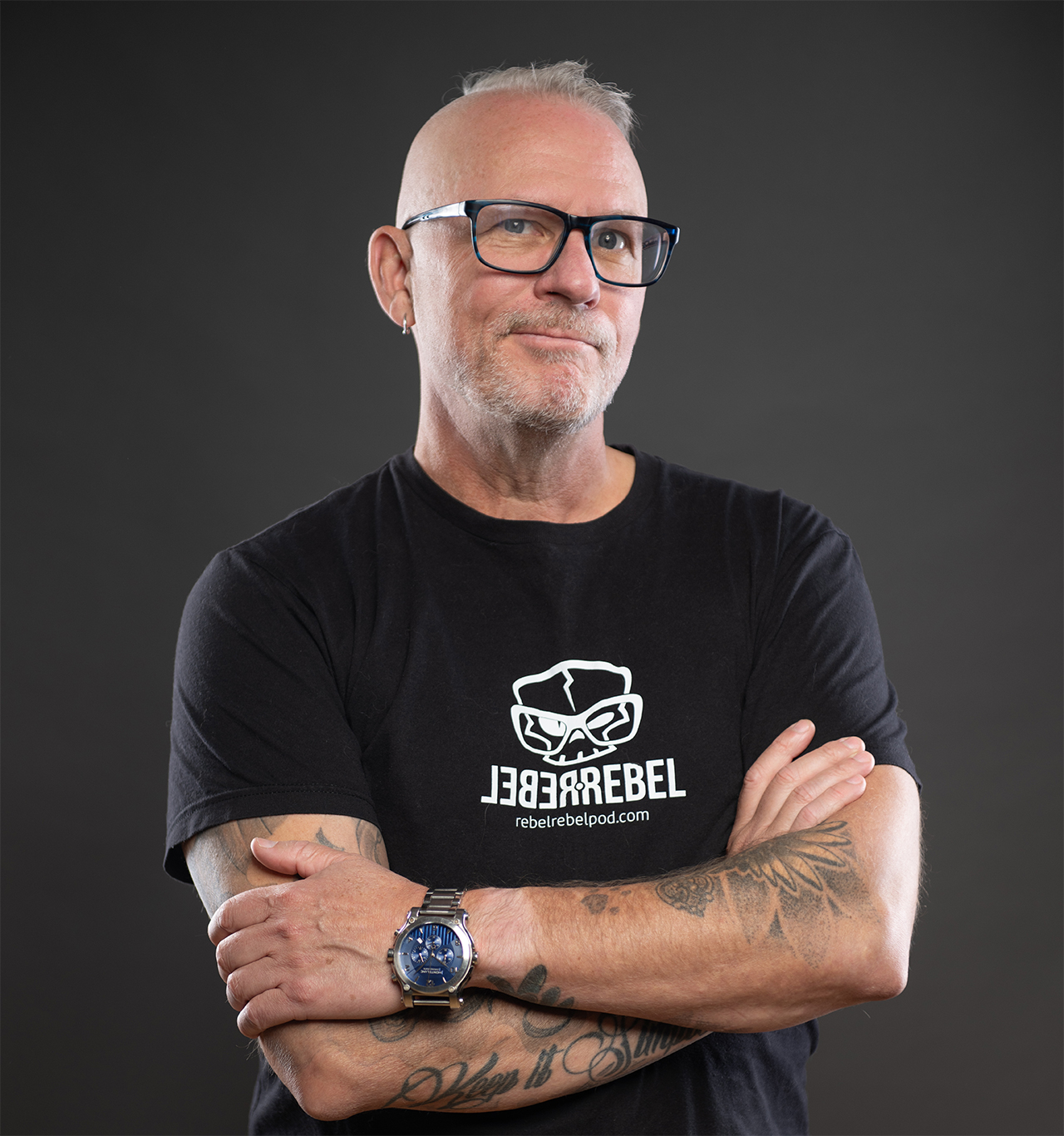
Michael Dargie is a creative strategist, entrepreneur, and the voice behind the RebelRebel Podcast. He founded Make More Creative, a creative agency helping brands stand out in a noisy world, and authored BrandJitsu™: Move Your Brand From 'Meh' To Memorable. A motorcycle rider, scuba diver, octopus whisperer, artist, writer, director, and adventurer — Michael brings a deep curiosity and genuine warmth to every conversation. He believes the best stories come from people who dare to do things differently, and he has spent nine seasons proving it.