Rebel Spotlight: Bruno Cignacco, Compassionate Business Scholar
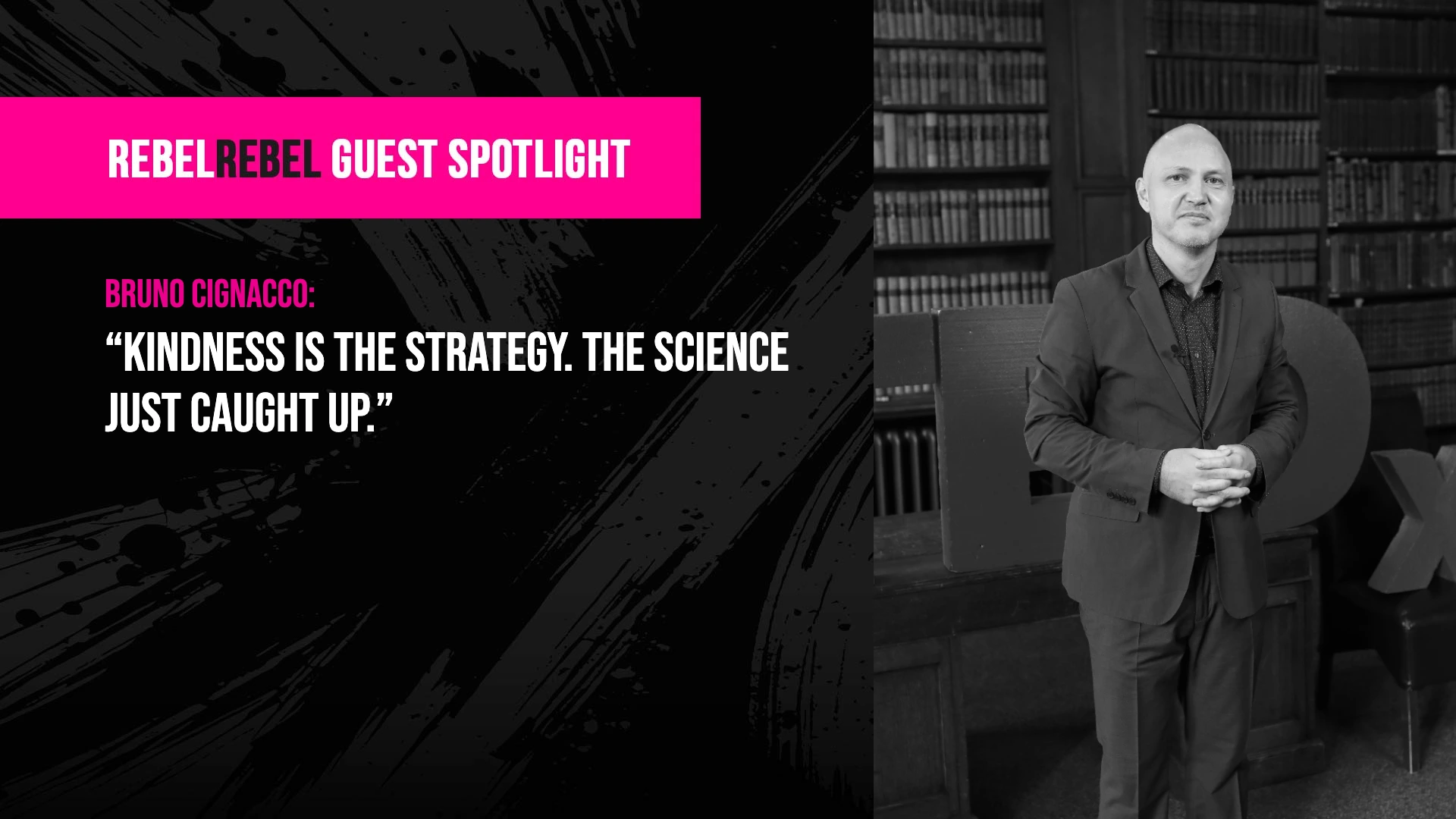
He said something early in our conversation that I couldn't shake. "The building brick of any business activity is not artificial intelligence, is not technology, is not information, is not money. It is the human being."
Simple, right? Obvious, even. And yet most companies are behaving like that sentence is a radical manifesto.
That's Dr. Bruno Roque Cignacco for you. He's based just outside London in Watford, he's been teaching at universities for over 30 years, and he wrote a book called The Art of Compassionate Business that is, in my humble opinion, something a lot of executives need to read before their next all-hands meeting.
The Guy Who Found the Gap
Bruno didn't set out to become the compassionate business guy. He was already deep into a career in international marketing and academia when he came across an article in the Harvard Business Review titled "The Human Moment at Work."
He told me the article hit differently than the usual strategy pieces. It wasn't about tactics or business models. It was about connection. About what happens when people actually know each other at work, beyond their job titles and org chart positions.
"This was touching me, touching my heart," he said. "I said to myself, this is a topic that is such an important topic and I haven't seen many books written on this topic."
So he went looking for the science. And he found it. Piles of it. Research on compassion in the workplace, on generosity, on gratitude, on forgiveness. All of it pointing in the same direction. Treat people well and your business performs better. Not as a soft, feel-good side effect. As a direct, measurable outcome.
He published the first edition of The Art of Compassionate Business in 2019, just before COVID. Then, after the world spent two years doing a collective reassessment of what work is supposed to feel like, he expanded it. The second edition came out in 2023 with hundreds of case studies and a mountain of new research.
Why This Is Actually Rebellious
Here's the thing. In the world of business books and MBA programmes and corporate consulting, talking about compassion is still considered a bit soft. A bit naive. The serious people talk about KPIs and margins and competitive positioning.
Bruno talks about whether your employees feel supported when they have a problem. He talks about five minutes of personal conversation before a meeting. He talks about social dinners where the CEO has no more power than anyone else at the table.
That's not soft. In the current business climate, that's genuinely countercultural.
And he backs all of it up with data, which is his secret weapon. When resistant companies push back, he doesn't get philosophical. He shows them the research.
"When I show them the research," he told me, grinning a little, "the coin drops."
Micromanagement, he points out, doesn't just demoralize people. It signals distrust. It treats employees like, as he put it, "naughty children." And the science is clear that people who don't feel trusted tend to disengage, do the minimum, and eventually leave. Which is not a great KPI.
Patagonia and the Planet as Shareholder
I asked Bruno to name a company he thinks is doing it right. He didn't hesitate: Patagonia.
His favourite detail about them is the on-site childcare. Employees can bring their kids to work. The kids are looked after by professionals during the day. Parents can pop in during breaks. And the company covers the cost.
"This is very difficult to beat," Bruno said, "because they are caring for employees in a very wholehearted way."
He also loves how Patagonia frames their purpose. Their shareholder, they say, is the planet. Every business decision flows from that. Organic cotton. Environmental donations. A supply chain built around reducing harm rather than hiding it.
Bruno's point isn't that every company needs to become Patagonia. It's that the underlying logic works. When you genuinely invest in the people around you, those people invest back. Customers become ambassadors. Employees become innovators. The whole system produces better results than a model built on pressure and extraction.
The P2P Thing
I mentioned something I say in my own talks, that the most important business model isn't B2B or B2C. It's P2P. Person to person. Bruno immediately pulled out research to back it up.
He described a scenario: two companies, same product, same price, same quality. The customer can't tell the difference based on the product alone. What wins? Personalization. The company that treats the customer as a unique human being with specific needs, not a line item in a database. That company gets the loyalty, the repeat business, and the referrals.
"This customer," Bruno said, "will become a very old but unpaid ambassador for this company."
I love that phrase. Very old but unpaid ambassador. That's basically word of mouth, dressed up in research language, and it's still the most powerful marketing that exists.
The Man Behind the Research
Bruno is Italian-Argentine, living in England, teaching at multiple universities, consulting globally, and planning a trip to Egypt that he's very serious about. (He delivered a talk to Heliopolis University online and has apparently been thinking about the pyramids ever since.)
He reads multiple books a week. He likes cappuccino and green tea in roughly equal measure. He never got the Batman car as a kid and has clearly not fully recovered from that.
When I asked him what fills his bucket, he said reading. Not as a professional obligation, but because every book that teaches him something new makes him feel humble. And he thinks humility is underrated, especially for people who've already achieved a lot.
"Many readers are leaders," he said, "and many leaders are readers."
He's been teaching for 30 years. He still gets that particular energy when a sceptical client finally understands the connection between caring for people and performing well. He called it "the coin drops" moment. That moment is, clearly, what keeps him going.
The Rebel Case for Kindness
What makes Bruno a rebel isn't that he's loud about it. He's not. He's measured, precise, and deeply serious about the science. What makes him a rebel is that he's been making the same quiet, evidence-based argument for years, in boardrooms and lecture halls and consulting sessions, that the way most businesses treat people is not only wrong but also stupid.
He's not asking companies to be charitable. He's telling them that caring for people is the most rational business strategy available, and that the research proves it, and that they should probably get started.
In a world still obsessed with extracting maximum short-term value from every human relationship, that's a rebellious position to hold.
Catch the full conversation with Bruno Cignacco on The RebelRebel Podcast. It's a good one to listen to the next time you're wondering why your team feels burnt out.
This article is based on
Bruno Cignacco and Profit With A HeartAbout the Author: Michael Dargie
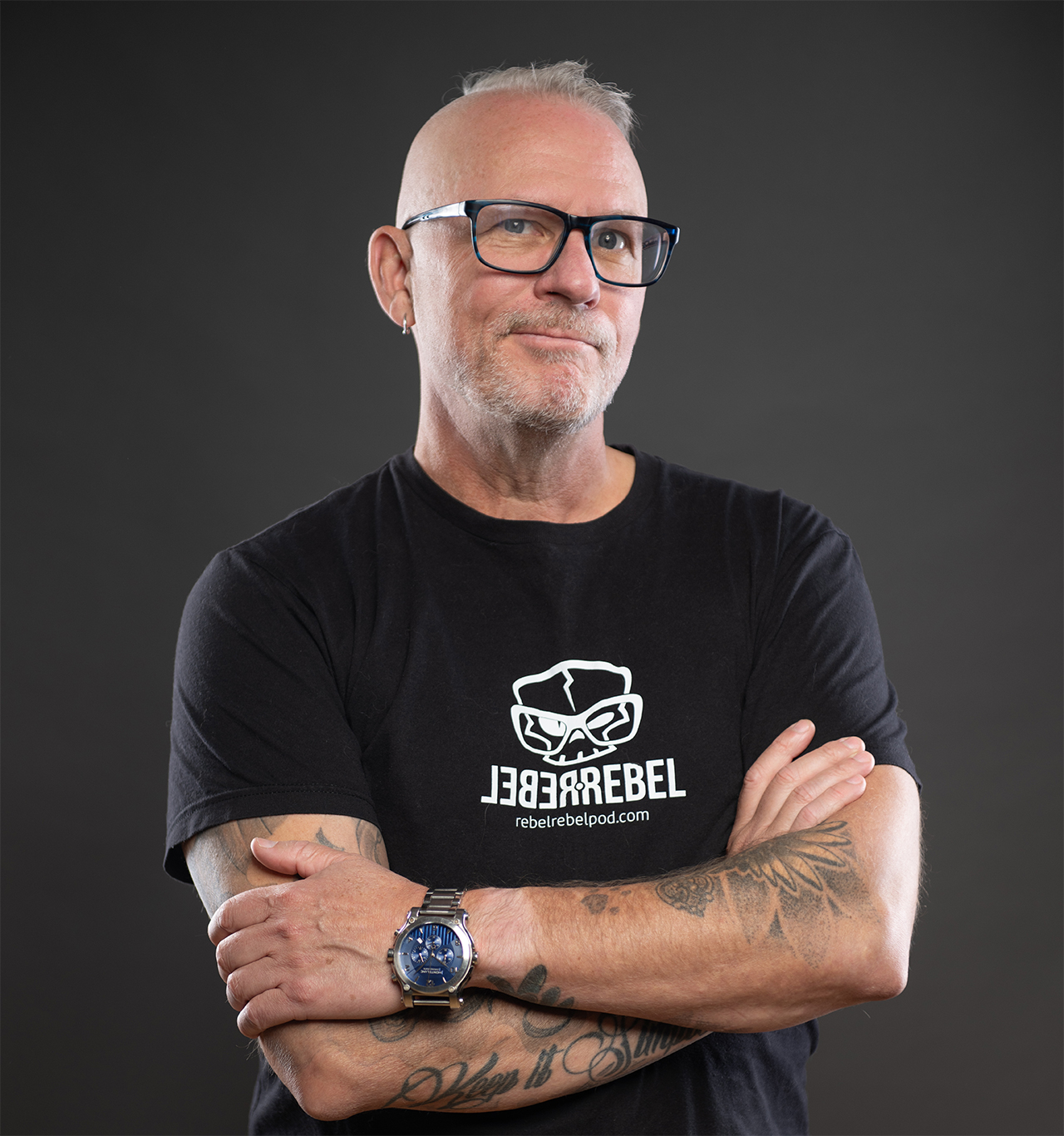
Michael Dargie is a creative strategist, entrepreneur, and the voice behind the RebelRebel Podcast. He founded Make More Creative, a creative agency helping brands stand out in a noisy world, and authored BrandJitsu™: Move Your Brand From 'Meh' To Memorable. A motorcycle rider, scuba diver, octopus whisperer, artist, writer, director, and adventurer — Michael brings a deep curiosity and genuine warmth to every conversation. He believes the best stories come from people who dare to do things differently, and he has spent nine seasons proving it.