Stop Hiding, Start Growing: What Mark Gillilan Taught Me About Showing Up
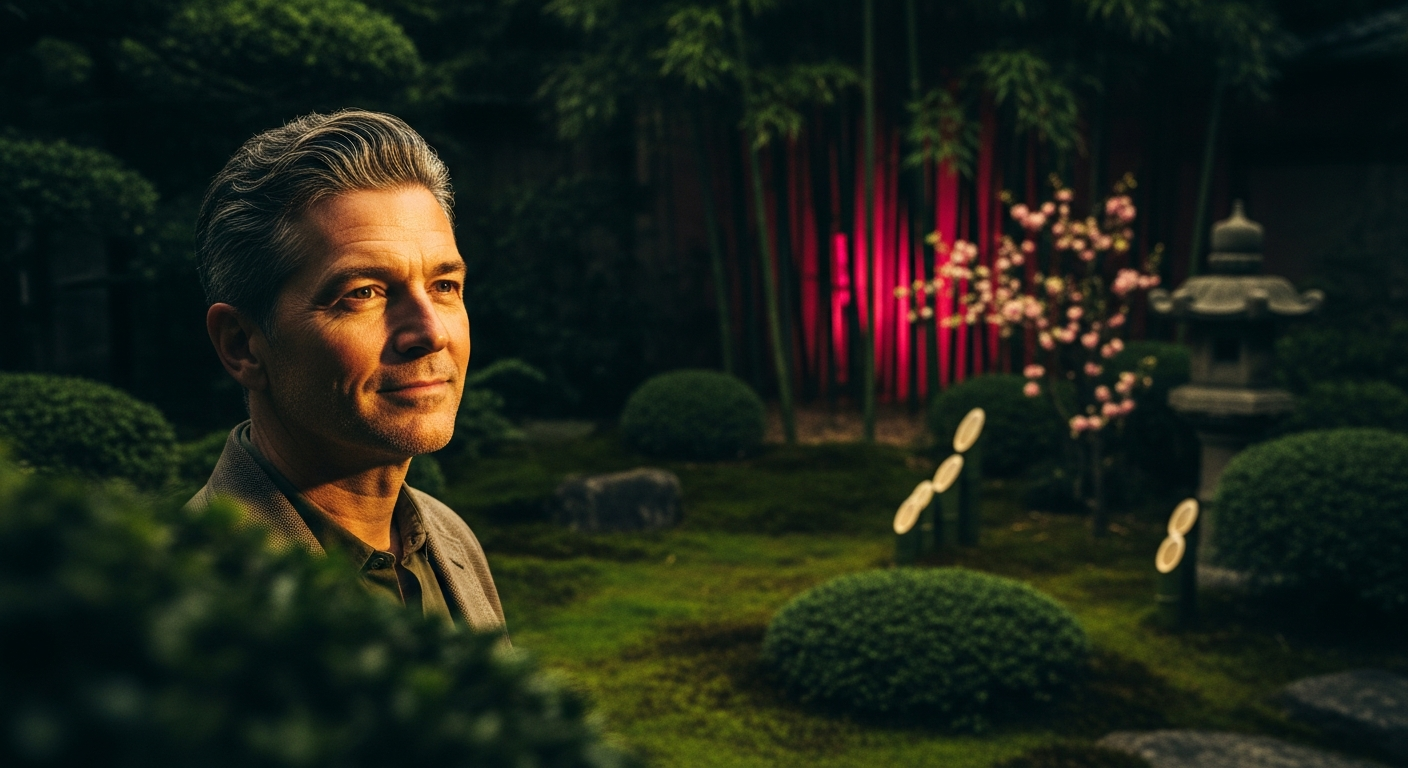
I almost mispronounced his last name on the intro take. Like, I had it on my list. I wrote it down. And I still just absolutely torched it on the first pass.
It's Gillilan. Mark Gilliland And he was gracious about it, which honestly tells you something about the guy right from the jump.
Mark is the founder of Kyoto Botanicals, a botanical wellness company he launched originally around hemp-derived CBD products and has recently expanded into functional mushrooms. He's a former wildlife biologist who grew up in Dallas turning over rocks in creeks, got bitten by a cottonmouth as a kid (didn't tell anyone, had the fang scars to prove it), and eventually made his way through consumer packaged goods marketing at places like Nestlé before landing in the cannabis world almost by accident.
There is a lot going on with this guy. In the best possible way.
The Accidental Botanist
Mark didn't set out to be the CBD guy. He wasn't one of those people who was like, oh my God, cannabis, finally, here we go. When an old boss recruited him to Charlotte's Web, the company widely credited with creating the CBD category back around 2014 and 2015, Mark had serious reservations.
"I had a negative perception of weed," he told me. "I didn't even know about hemp and CBD and all that stuff."
He spent a long time thinking about it before he said yes. And then, from week one, he was done. Completely converted. He met the original families, met Charlotte Figi herself, and got to witness firsthand what the plant could do for people who'd been failed by conventional medicine.
What struck him wasn't just the efficacy. It was the mischaracterization. The decades of deliberate messaging that had turned something genuinely useful into something culturally radioactive. He decided he wanted to spend his career pushing back on that.
So he launched Kyoto Botanicals. Named it deliberately, because he always knew he wanted to go beyond a single plant. He was thinking about the long game from day one.
The Biology Kid Who Never Really Left the Creek
Before we got into any of the business stuff, I asked Mark about seven-year-old Mark. Not a rhetorical device. I was genuinely curious. Because there's something about founders who can trace a straight line from who they were as a kid to what they're doing now. It's rare, and it matters.
He grew up in Dallas, riding his bike out into the woods, finding a creek, and wandering around in it from sunup to sundown. Turning over rocks. Catching things. He studied biology in college, spent years after that doing wildlife surveys, including helicopter surveys out in the field. (He has strong opinions about how much better helicopter pilots are when they're on a private hire versus a charter, and honestly I believe him.)
The through-line is obvious in retrospect. Nature. Observation. Patience. Understanding how living things actually work versus how we assume they work.
He mentioned a book he'd been reading, and he blanked on the title, but I knew it. Ed Yong's An Immense World. It's about how different animals sense the world in radically different ways. How a dog isn't cold when you're cold. How some creatures see in ultraviolet. How the world we experience as humans is really just one version of reality among thousands.
Mark said it humbled him. That you can get myopic about how you're perceiving the world. And that most of the animal kingdom doesn't see it the way you do.
I'd argue that's also a pretty good philosophy for running a business.
The Faceless Company Problem
Here's where it gets interesting. And by interesting, I mean uncomfortably relatable.
When Mark launched Kyoto Botanicals, he defaulted to what he knew. Consumer packaged goods. Brand management. The Nestlé playbook. Segmented audiences, structured messaging, carefully considered go-to-market strategy. The MBA approach.
He ran that way for years. And the whole time, in the back of his head, there was this nagging feeling he kept pushing down. The feeling that his actual differentiator in a crowded category wasn't a better formula or a slicker label. It was him. His voice. His genuine belief in what he was building and why.
"I kind of suppressed it for a long time," he said. "That kind of my differentiator in the category was me and how I felt about it and what I knew about it and my unique voice."
A few months before we talked, he finally stopped suppressing it. He redesigned his homepage based on what he actually wanted people to experience, not what a focus group would sanction. He started putting his name everywhere. He turned on a camera and filmed a YouTube video, just himself talking directly to whoever would listen.
He told me he watched that first video by accident the day before our conversation. His words: it is so bad.
He did it anyway. Thirty days in a row. Or close to it. And by day five or six, the nerves were gone. It was just part of his routine. He turned the camera on and talked about whatever he wanted to talk about that day.
The Fear Nobody Talks About
Mark said something in this part of the conversation that I've been turning over since. We talk a lot about the fear of failure, the fear of rejection, the fear of what your family and friends will think when you put yourself out there. Those are real. But Mark named the other one.
"What if it's successful? What if people actually like what I'm doing and like me? That's almost scarier for us to manage mentally."
Yes. That's the one. The fear of being seen and it actually working. Because then you have to keep being that person. You can't quietly retreat and tell yourself it just wasn't for you. You're in it.
Mark pushed through both fears by doing the thing badly first and not dying. That's genuinely the whole method. Turn the camera on. Film something terrible. Do it again tomorrow. The terror has a half-life of about five days.
The Highs and Lows Nobody Warns You About
One of the things I asked Mark about was what surprised him most about running his own business. He gave me the thousand-yard stare for a half second before answering.
It was the volatility. Not the practical stuff. The emotional whiplash.
"There's no high higher than a successful, whatever you do," he said. "And then the lows are like no other lows in life."
He compared it to being that teenager in a bad relationship that everyone around you can see clearly but you just have to live through yourself. Nobody can tell you. You have to find out on your own. The books don't quite capture it, and the people who've been through it can't fully convey it either, because the only way to understand the emotional range of founding something is to actually do it.
What helps him regulate when it slides too far in either direction? He gets outside. Walks the dog around the block. Goes for a run. Sits in the sun for three minutes if that's all there is. He grew up in creeks, so it makes sense that his nervous system resets in contact with something natural.
Grace, Both Directions
I pulled a move on Mark near the end of the conversation. I set a scene, a campfire in the woods, a creek babbling behind it, the soft give of the forest floor underfoot, and asked him: if you could wish one thing for the world, sitting there, what would it be?
He didn't take long.
"I think we can all have a little more grace with ourselves and with other people."
He talked about watching his almost-fifteen-year-old and almost-twelve-year-old be hard on themselves even when they're doing genuinely well. Better than he did at their age, he said. And seeing it mirrored back at him. The reminder to celebrate what's actually going well, not just white-knuckle through it toward the next thing.
He admitted he's been bad at this most of his life. Pretty sarcastic, pretty distant. Working on it. I appreciated the honesty more than any polished answer would have offered.
What You Can't Outsource
Near the end, Mark said something that's stuck with me. He was talking about the YouTube channel, about why he finally committed to putting his face on camera, about scaling the kind of one-on-one conversation he loves having at farmers markets.
"What can you do that AI can't just rip off tomorrow? Put your face on camera."
He's right. The product can be copied. The branding can be approximated. The category expertise can be summarised by a chatbot in four seconds. But the specific human being who picked up a venomous baby cottonmouth as a ten-year-old in Dallas, who spent years doing helicopter wildlife surveys, who makes bread on Sundays and wanted to make Indian food this week, who can't remember the title of a book mid-sentence but clearly loved every page of it, that's not replicable.
That's the whole point. Your story is the most defensible thing in your business. Mark spent years treating his like a liability. Now he's betting the whole thing on it.
Based on what he's building, I think that bet's going to pay off.
He mentioned that the day before we talked, he'd had his most successful YouTube Short ever. Two thousand views in the first couple of hours. He said it with this quiet, slightly disbelieving pride that was genuinely charming. He's not trying to be an influencer. He's just trying to reach the right people, one at a time, at scale.
Stop hiding, start growing. It's right there in the episode title, and Mark Gillilan lived it in real time before he even named it.
Catch the full conversation with Mark Gillilan on The RebelRebel Podcast, including his thoughts on botanical wellness, the books that shaped him, and why a baby cottonmouth bite will make you rethink everything about risk.
This article is based on
Care Before You Cure with Mark GillilanAbout the Author: Michael Dargie
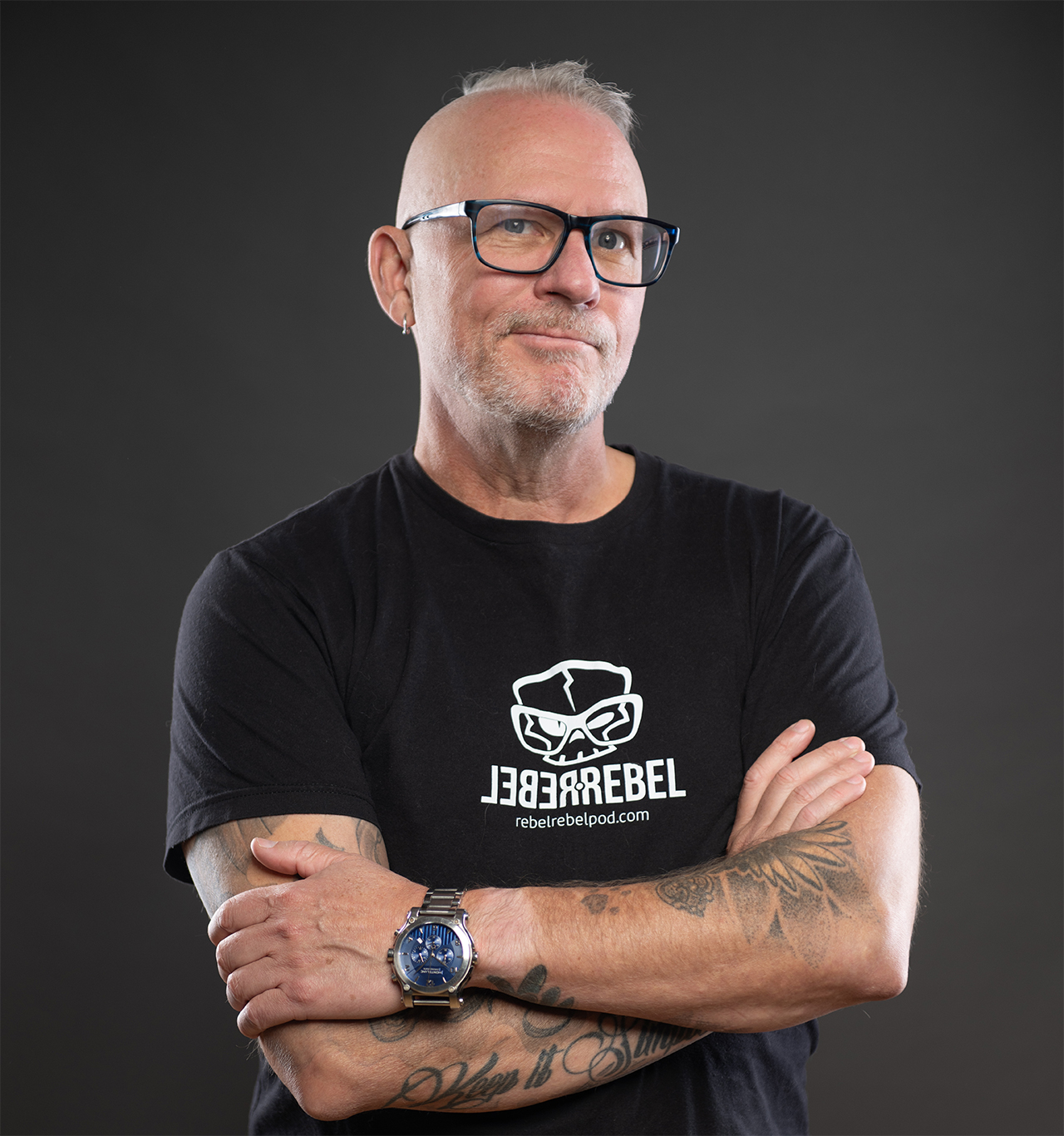
Michael Dargie is a creative strategist, entrepreneur, and the voice behind the RebelRebel Podcast. He founded Make More Creative, a creative agency helping brands stand out in a noisy world, and authored BrandJitsu™: Move Your Brand From 'Meh' To Memorable. A motorcycle rider, scuba diver, octopus whisperer, artist, writer, director, and adventurer — Michael brings a deep curiosity and genuine warmth to every conversation. He believes the best stories come from people who dare to do things differently, and he has spent nine seasons proving it.