Writing Through The Darkness with Corey Croft
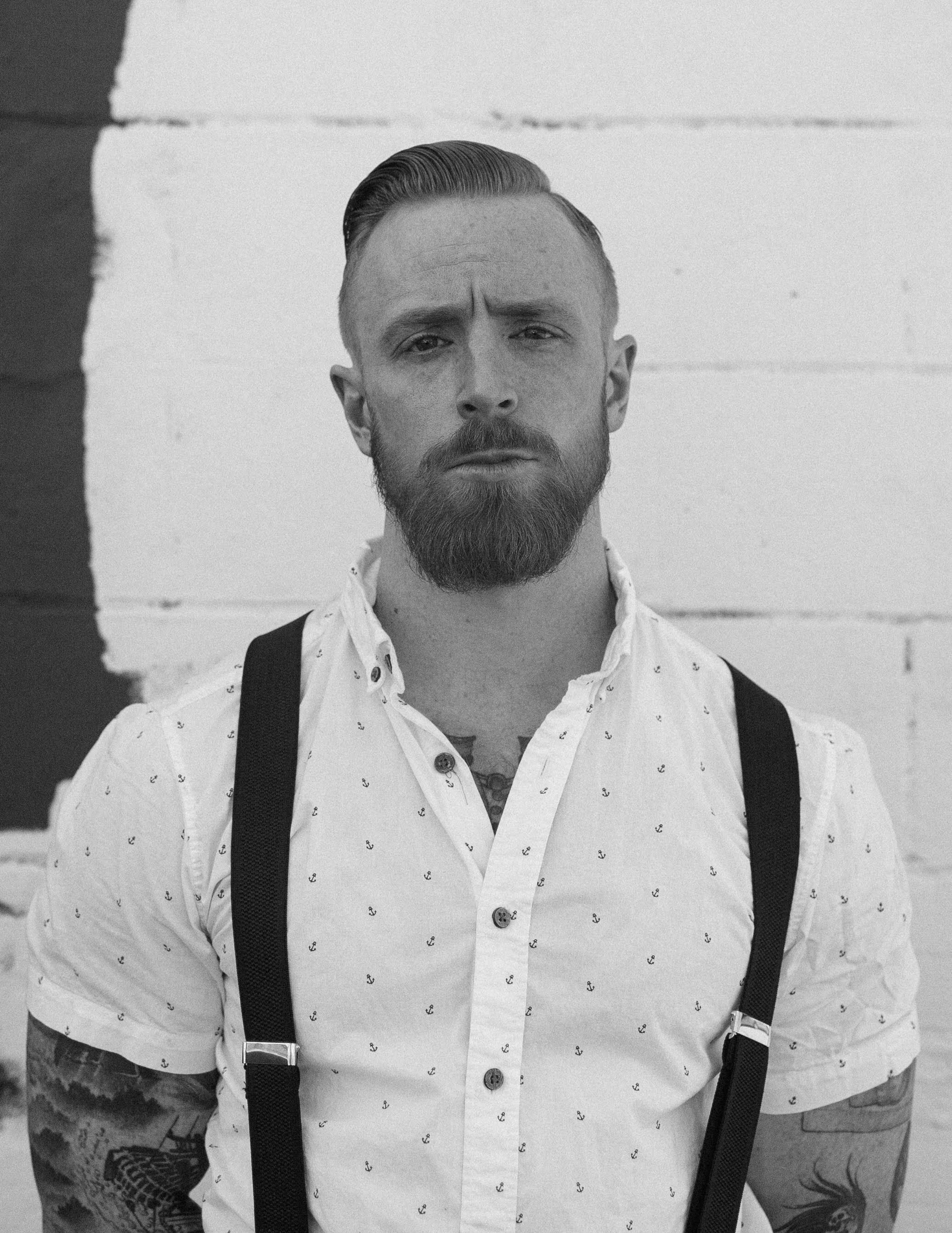
Corey Croft
My publishing house is called Fly Pelican Press, and my new book, releasing this May, is called Scumbag Rehab.
I'm an independent author and publisher based in Vancouver, BC. I champion unrestrained storytelling and am passionate about sharing my art and inspiring others to do the same, regardless of the industry norms and trying to fit into any one 'genre'. The books I write are often viewed as divisive and extreme. People either love them or hate them, and it can be tough to categorize them into one particular genre, but I believe in sharing my work and want to inspire others to do the same. Stories like these need to be shared to remind the world that art IS challenging, intense and beautiful. A lot of my work speaks to mental health struggles as well, which can be uncomfortable for some to even think about, let alone read about. But I can soundly say that anyone reading my work will feel it in their guts.
Vancouver author and indie publisher Corey Croft sits down with Michael Dargie to talk about what happens when you stop waiting for the right moment and start putting words on the page. This is a candid, sharp conversation about creativity as a survival tool, the discipline behind authentic storytelling, and why shrinking your ego might be the most rebellious thing a writer can do.
Michael Dargie opened by asking Corey Croft to bring listeners up to speed on his current work, which led straight into a discussion about France Versus Brazil 98, Croft's forthcoming novella under his own Fly Pelican Press imprint. Croft described the book as literary fiction with an existential slant — something in the vein of Camus or Sartre — and walked through his deliberate choice to sell through Amazon for its print-on-demand accessibility while keeping e-book distribution tightly controlled. He also explained why he chose to focus exclusively on Instagram rather than spread himself thin across every platform.
The conversation turned personal when Croft traced the origins of his writing life back to a period of serious depression and anxiety. Unable to connect with traditional therapy, he stumbled across a community bulletin board challenge — a thousand words a day for a month — and found that putting fiction on the page did what a therapist's office couldn't. That first novel, written as a kind of self-administered treatment, shaped him as both a writer and a person. He credited Crime and Punishment, read on a Megabus from Montreal to Toronto, as the book that cracked him open and made him understand what literature could actually do.
Croft and Dargie spent time on craft, with Croft sharing his honest frustrations about writing tropes — particularly the reflexive physical description of female characters, the tendency to over-describe using every sense at once, and the failure of many authors to write outside their own lived experience with any real authenticity. He was equally generous with practical advice: treat writing like a job, dress for it, schedule it, and above all, kill the ego before you sit down. His mother, he noted with affection, was one of his most useful editorial voices.
The episode closed with Croft reflecting on what keeps him going on the harder days — a series he has written eight instalments of, with two more planned, and a head full of stories that still need telling. He spoke openly about anxiety and depression as ongoing companions rather than past battles, and made the case that weirdness, defects, and the refusal to be homogenised are exactly what make people — and the world — worth paying attention to.
Key Quotes
“I started writing things instead of talking to a therapist. And I realised this isn't just a bunch of pissing and moaning — this is something I can make. I can use a narrative to cocoon these moments, and then let something beautiful out as the story progresses.”Croft describing how his first novel became a form of self-therapy during a period of serious depression.
“Leave the ego at the door. Let it shrivel up and die on the vine. For an artist, especially nowadays, it really doesn't behoove you to have any. You have to have self-belief, but anything that comes your way, you should do. There's no idea too small.”Croft offering his most important piece of advice to aspiring writers.
“You always have time. You just have to make it. Sitting on the couch doing nothing — that's time. Anything you can convert into usable time.”Croft reflecting on the moment he stopped telling himself he'd write "when he had time" and actually started.
“Every friend I have on a deep level has defects. And that's what makes them who they are — unique and weird and absurd human beings. That's why I love them. The freaks make the world.”Croft making his case against the creeping homogenisation of people and culture.
“The stories in my head are the connective tissue between me and the world. To sever that would be to watch the planet float away like a leaf on a lake.”Croft explaining what keeps him motivated through the ongoing challenges of anxiety and depression.
Key Takeaways
- Start writing now — you already have the time, you just have to decide the couch time is writing time.
- Treat your creative work like a professional job: set hours, get dressed, take a lunch break, and show up consistently.
- Shrink your ego before you sit down to write — self-belief and ego are not the same thing, and only one of them serves the work.
- Write from your own authentic experience; resist the temptation to portray lives you haven't lived through a superficial lens.
- Use restraint when describing scenes — one or two well-chosen sensory details land harder than exhaustively cataloguing every sense.
- Accept that rejection, failure, and long timelines are part of the creative life, and calibrate your expectations accordingly.
- Protect your mental health by being deliberate about what you consume — Croft avoids the news entirely so he can keep creating.
Links From This Episode
- France Versus Brazil 98 by Corey Croft
- Fly Pelican Press
- CoreyCroftAuthor.com
- Corey Croft Author on Instagram
- On Writing by Stephen King
- Crime and Punishment by Fyodor Dostoyevsky
- Brand Jitsu by Michael Dargie
- MichaelDargie.com — annual marketing plan tool and brand export course
- The Matrix (film)
- Walden by Henry David Thoreau
- NaNoWriMo (National Novel Writing Month)
Related Articles
Corey Croft on Writing as Therapy, Ego Death, and Staying Weird
Vancouver indie author Corey Croft showed up to our conversation with depression, Dostoyevsky, and a very strong opinion about finishing terrible books. What he left me with was a lot more than that.
guest spotlightRebel Spotlight Corey Croft, Writer
Vancouver indie author and publisher Corey Croft turned depression, a community bulletin board, and a thousand words a day into a literary life. He's the kind of freak the world needs more of.
key takeawaysRebel Take-Aways From Writer Corey Croft
Vancouver author and indie publisher Corey Croft sat down with me and dropped some of the most honest, hard-won wisdom about writing and creativity I've heard in a long time. Here are the takeaways that stuck.
Transcript
Michael Dargie
Welcome to the rebel. Rebel. Way. Today's episode is brought to you by, well, me. Visit MichaelDargie.com to order a copy of my book, Brand Jitsu. Move your Brand from to memorable. And while you're there, check out the cool tools I built. There's one to help build your annual marketing plan in minutes, not weeks. There's an online course about how to get your brand expert ready, and while you're there, don't forget to join my monthly newsletter, chock full of other cool and weird people and stuff. The Rebel Rebel is a podcast for creative rebels and entrepreneurs who think audaciously and act courageously in service of making the world a better and more interesting place. Vancouver author and indie publisher Corey Croft is here to talk about writing as therapy, shrinking the ego, and staying authentic in a world that wants to get sand off your edges. This is a conversation about discipline, depression, creativity, and why freaks make the world more interesting. Welcome to the rebel. Rebel. I'm your host, Michael Dargie. And somewhere across the world from me, we're going to find out where. Please welcome to the show, Corey Croft. Corey, how the heck are you?
Corey Croft
Pretty good. Thank you for asking. And just enjoying a nice balmy eight degrees with, pretty, pretty, pretty strong current of rain out there in Vancouver. Very nice.
Michael Dargie
I have got I'm just like. I'm also eight degrees and it's sunny but windy here in Calgary, Alberta, Canada. Okay. So Corey, just to catch people up. Okay. You're here. I've been looking forward to this interview for quite a while. Since you first sort of crossed my, my, my bio. So I'm just like, you know, here's this independent author and publisher, and, I mean, I've seen a lot of independent authors. There's lots of people out there doing that. But I've never really run into I don't think I've ever run into an independent publisher like Sammy, who just took it to the next level. So I just want to, you know, catch us up on what it is that you're up to right now. And then we'll go back in time to figure out what made you this way. Have some good luck.
Corey Croft
So right now, I, independent author, I have a new book coming out called France Versus Brazil 98, which is a, It's a hard one to describe. I'd call it, it's a literary fiction, definitely, with an existential slant. So my look at every book that I kind of make has these different influences about it and just kind of whatever speaks to you at the time, however the book wants to be written. So I would liken it to something about like Cameroon or like Sartre, like in that vein of pondering existence, finding meaning, driving purpose. So that comes out January 20th. It's a novella. It's not too scary, not too big. And that's coming out under Fly Pelican Press, which is that little boutique if you want to call a publishing house.
Michael Dargie
Nice. Yeah, that I own and operate. Love it. Okay. So let's just, you know, dial this in. Where can people find this and learn more about you and buy books?
Corey Croft
Sure. So the best book to buy them, the best place I always try to funnel people, unfortunately, is, Amazon, because they have the best algorithms. They have the print on demand. You can do, like a very it's quite easy to navigate and and not too expensive on the, on the consumer. And also they get a little jealous when you try and sell ebooks through other ways. So its e-book is exclusively on Amazon. The print is available in different places. Okay. To find out about me, there's two main ways. There's my website, which is Corey Croft, author.com. And that's kind of going to have some poetry, some information about my other books and just some, you know, cute little, you know, paragraphs about the author and company and then, same name. Corey Croft, author. That's my Instagram account. And that's where I do most of my, that's what I do exclusively on my social media.
Michael Dargie
Oh, good. Okay. So yeah. Interesting. So you chose one, one place, in is that by by design that because keeping up with multiple platforms is ridiculous. Like, tell me about that.
Corey Croft
Well, that's the one. So I was working with a guy like a pal of mine back in the day. He's like, oh, you got to get on this Instagram thing. And I was like, I think I have an account. And it was just like some pictures of, like, just random nonsense. I didn't really understand it. So I went with that one. And then I don't understand Facebook. I haven't used it for years. I know my stuff uploads there, but like, it's it's over my head and TikTok. I spent like, like a few hot seconds and upload stuff there. And it was a whole it was I that's it was one of those few moments when you kind of, you know, sit back and go, oh, I'm old. Yeah. Or like, just not cool or not help, you know what I mean? So I just kids get off my lawn. Yeah. So and I have about the, the time and almost the energy to focus on one thing and that's the one is I can otherwise like I can lose my head, I don't yeah. It's fair. It's totally fair.
Michael Dargie
Let's go back in time. And, what on earth happened to you that made you an author? You poor guy.
Corey Croft
Okay, well, the I would say, like, the, the genesis of, like, wanting to write came when I was in undergrad and I had, I would just get random ideas and, and then I would think, oh, you know, that'd be cool. I should write a book one day when I have time. When I have time. Yeah. And I'd get these ideas and I never write them down, but, you know, like, you're in university age, your undergrad age cycle. So I'm brilliant. I'm like, I'm, we're I'm one of the people is going to change the world. I didn't necessarily think that. But the first part of that. So I was like, when I have time and then the ideas would keep coming and then I would just be like, when I have time, when I have time. And I realized, one day when I was, on a day off when I was just kind of like digesting lunch, watching probably YouTube, that you always have time. You just have to make it like what I'm doing right now, just sitting down, doing nothing. That's time. What am I doing? It was time on the couch. Is time anything you can convert into usable time? Yeah. So that coincided with a real, I guess, like a point of difficulty in my life. Like a lot of depression and anxiety, to the point where, like, I therapy was becoming cool, like it was this thing that it wasn't just like, you know, people with straitjackets were given with a clipboard. So the girl, the woman I was dating at the time, she's like, well, maybe you should go talk to somebody, you know? And and I went, that's a different way of saying like, can you stop bothering me with this? Can you go to somebody else who you're painted like, listen to you. Right. So I go to a couple therapist because they're like, oh, the first one's free. And I realized like, oh, they're just going to start asking me about my childhood, right? Like, no, I don't admire the problem now. So what is that going to do? So yeah, I, I saw that it was International Writing Month, last month, and I was like, you know, it's then like the goal was, it was just like a weird ad and like on a, on a on a board with a couple tax. And I looked at as a thousand right, a thousand words a day for a month. It's not like NaNoWriMo. Or is that it is just like on a community bulletin board. And I was just kind of like letting my eyes, you know, like those old, 3D pictures. You just like your eyes, spirit and stuff. It was kind of like that. I think I was just, like, wandering the halls of some community center. Some could ghost and so I just looked. Then I was like, that's a really that's a I could do that. Like, that's a good way to get started in those stories you always had. And I did and like, I sat down to do it the first time and I had nothing, nothing. I was like, well, come on, smart guy. This is years removed. And a lot of like, you know, the color, the color Jade really being, you know, you know, painted on my soul. So I was like, I need community. I can't do nothing. But then I made myself do the thousand words and they got easier and easier every day to the point where, like, I just stopped myself and I started noticing as time went on. Like the first book that I wrote is not the first book that was published, but it ended up becoming a novel and one that I really love because I just saw it. Instead of like, talking to a therapist, I just started writing things and then I this is where, you know, actual like that. I think something special in you comes out where it's like, this isn't just like a bunch of, like, pissing and moaning or just like some, you know, guys screaming at clouds. This is like something that I can make and use a narrative to, you know, wrap around to maybe cocoon to entomb, and then we're going to let something beautiful out as the story progresses. So I spent a lot of time working on that. So I had a lot of errors. It was like hundreds of thousands of words and then pared down to like maybe 100,001 20. But it was a good learning experience. And so writing for me became therapy, I suppose, say, and I can see that my I know I can few the differences in my personality in my day to day life, not even just the fact that I now isolate moments of the day to write, but also just like the kind of person I am, the man that I become, I owe exclusively to digging inside to the difficult parts and and to, you know, just you take them to pumice stone and so on against those traumatic moments and the tragedies that we all face and learning from them and opening them up.
Michael Dargie
Wow. That's awesome. Holy shit. Who's one of your favorite authors?
Corey Croft
Well, I can tell you I have quite a few. But the author that got me into writing, like the one that kind of pushed me further to be like, okay, this is why I want to write like, things. There's influences that make us do something or that change us. So provide like a, you know, a southerly wind into our sails, make us dig. Oh, I want to do this kind of thing. But the author got me like that. Absolutely. You know, touched me into this, into the soul was Dostoyevsky. That book was Crime and Punishment, and I was reading it on a megabus going from Montreal to Toronto. And, there was just like, that was the moment when I realized, like, that was the moment when I stopped looking at things and let things kind of, like, permeate into me and touch my heart.
Michael Dargie
Wow. Holy shit. Okay. Do you have a favorite time of day to write to you that your muse happens at the best time?
Corey Croft
I tend I treat it like, I read what was it? I think it was Stephen King's on on on writing. Yeah. So I really I took in some of those lessons. So I treat writing like the job. So for me, like on the days that I have to work because I work nights, I will tend to get up and do my, the morning routine train and whatnot and then come home, shower, put on a pair of pads, make sure you're always fully dressed when you sit down to work right. You don't just go to work, you know. You know your bed, you know? So like, I tend to come back and then start like, prepare food and then so I'll work, I'll break for lunch, and then I'll keep working and then I'll go to work, or I'll treat it like an eight hour work day on my days off. Oh, wow. Same kind of thing. Lunch break and that kind of stuff. But so usually during the day, because it burns me out. And by the night, I'm, I'm about I have about the, I have about the same attention span spinal cord as a jellyfish. So I'm just. Oh, and you see, if anyone wants to have any serious conversations, it's probably just going to end up, you know, poking a blob with a, with a stick, you know? But I also really like writing at night if I get the opportunity, if I do, something happens and I it's it's fine. It feels like it almost feels like rebellious to just. Yeah. Oh, how long this can last. Are we going to be up to four in the morning? That's fun. Holy shit.
Michael Dargie
I'm just I don't know, just out of curiosity, is there like a, a a writing trope that you just hate, that you're just every time you see it, you're just like, oh, come on.
Corey Croft
Yeah. Goodness. There's a few I got. I got a couple. I hate it when. Okay, so thus far, anytime I've written a novel or something with serious stakes, not just like, you know, some a fun short story or an absurd little piece.
Michael Dargie
Yeah.
Corey Croft
My main characters are always men. They don't have to have any. I oftentimes like withholding ethnic and age and and ascribe traits from the audience. Like it's just this character exists. Fill them with what you want, I love that.
Michael Dargie
Yeah.
Corey Croft
I refuse, not refuse. I just haven't found the proper way to write a female lead character for a couple reasons. One, because I feel like, a lady could do that better than me. More genuine, more authentic. It's their voice. And two, because a lot of the times when women write men and women, probably more so, it just comes off is so base and and just and and superficial almost to like I read a book by an author who I really love who had a female lead. It was a female lead, you know, protagonist. But if I was a I feel I was reading it as like a pretty open minded, you know, fella. And but if I was a lady reading that book. Come on, grandpa, like, is that really what you think we do?
Michael Dargie
Oh, you know, so I feel like trying to, like, just create a character, create.
Corey Croft
Yeah. A character, a situation that you don't really have first hand experience is, is is can be good, but it can also end up just character. You can you can taste that lack of authenticity in it. And it's just like what you could have made is something else. You you could have made it more even. You could have been more indifferent or or not given so much light. I don't know, like certain things that stereotypical things that men and women do have and, and then, you know.
Michael Dargie
Yeah. Yeah.
Corey Croft
I hate it when I, when I start reading something and they describe like a woman's physical beauty first. And I see that in a lot of scripts too. Like Diane was a blond bombshell, 3420 whatever. You know, when she walks in the room all eyes stared at her, you know, sexuality dripped off her like, oh, like all this shit. I'm just like, we can do better. I, I was having a conversation with, with a homeboy of mine, and he's like, he's a he's a he's a black dude. And he's just like, why are we always why are we always candy? Why are we always flavors like, why can't it just be like, you know, so this is, you know, had the had the, had the, had the base of a tree, you know, was always going to be chocolate or caramel. Does it allege or keep, you know, that kind of thing.
Michael Dargie
Right. Which is true.
Corey Croft
Sure. Yeah. And the other thing, but here's the thing though, is like I have a two rules. One is that if I'm going to describe, I used to have this pawnshops, you know, I used to have this bad habit. My mom called me on it because she reads a lot of my work. She looks like she's like, well, she's like, I love how you describe things. But sometimes, like, I don't need to know, like, you know, it's taste, touch, smell, you know, like all this stuff. So she was dead, right? So what I started doing was picking. Sometimes you need to like, give everyone the universal or holistic kind of, scent. But sometimes you can get away with using one, maybe two scents, like how to feel, how to touch, like, you know, what was the air like, you know, was it heavy? Would it smell? You don't need to say that. Like, you know, you don't need to talk about the sconces all the time to give one feature that kind of demonstrates what you're trying to say is to show, not tell, that being said, I love the way some authors tell. Like, they're just so cool. They have such a swag about them. You know, they're just like their style monsters. So those when you think that you when you confidently can say, like, I can tell this in a way that is captivating, go for it. You know, take the risk, because otherwise you're just going to have a whole bunch of people chattering their teeth, you know, a whole book. It's used to show you that it's cold. Sometimes you just got to say, you know, it's cold or like certain things.
Michael Dargie
Yeah, sometimes blunt is great.
Corey Croft
Yeah.
Michael Dargie
Oh that's great. Well, I was going to ask like, what's, it doesn't have to be that lesson, but aspiring writers, what would be your, what would be your on writing?
Corey Croft
My first thing I would have to say is just you're not too good for anything. You're not like, leave the ego at the door, let it shrivel up and die on the vine. Get swept away by someone's shoulders. They pass by it, you know, towards the manor at night. It's late for an artist, especially nowadays. It really doesn't behoove you to to have any. You have to have self esteem. You have to have self belief. But anything that comes your way, anything that pops in your head, you should do, there's no idea. It's too small, there's no creator to work with or to answer that's too small. But it's to me, one of the things that I had to do, learn to do, was to digest the fact that, you know, might not happen, or it might take forever to happen. And it's success. And overnight, no matter how good you think you are. So I think your expectation levels, I suppose, have to go in stride with, you know, expectation levels and the ego have to be really you know, genuflect to reality, you know, like and that's, that's the big one for me. And the other thing for authors that I hear all the time, like, so I, you know, I meet a lot of people and they hear I'm an author and everyone's got a great idea, you know, like, like someone I know used to have, but no one has the time. And then I don't I would never tell someone, hey, why don't you take inventory about how often you you do school or you do certain things, but the reality is you do have time. You just have to have the heart. You have to have the, you know, the will and the soul to to to purge and to to care. You know, it's all it's about how much you care to tell that story.
Michael Dargie
Yeah. That's awesome. Where's your favorite place to go for a stroll in Vancouver? Do you have, like, a do you have a, you know, do you go to the park? Do you walk along the seashore, like, what's what's your thing about have.
Corey Croft
Yeah, yeah. Okay. So here's how my route is dictated I live in the West End, so I live, if you're familiar with the geography of Vancouver, I live at the top of the hill in the West End before it goes in the old town. Basically, I live by the only gas station in downtown Vancouver. Okay, so my route is to walk down my street, which I won't say. Yeah, but I walk down my street and I know for a fact it about 500m, maybe a little more. Not quite. At the beach, there's, there's a bench, and that bench receives a, like, a perfect beam of light that you can read a book under that orange light where it kind of makes everything fuzzy and soft.
Michael Dargie
Oh my God.
Corey Croft
Yeah. So I, I'm, at this point in time, who knows? Maybe the next time I see I smoke cigarets. So when I read, I like to, I like to grab a coffee. It's, you know, after a, you know, grab a soda water and then go down and read a little bit, smoke a couple times. So I know that there's benches outdoors. I know it's well lit. And I know if someone's sitting there when I pass by, then I'm probably going to have to go for another walk around the block. But I do that. And then I come up another street, which is really, really quiet. But you can still kind of hear the water, you know, headphones. And that's my that would be my like my, my summertime block candle in the, in the rain. Like you can't read because your book is right, right.
Michael Dargie
Okay. Before I get to my my next really big question. Are you a dog eared guy? Are you are you for an hour against dog gearing?
Corey Croft
Pages. And let them go, Snoopy. So, you know, let us go to Snoopy. Is that is it just like, just let it sleep on the roof, you know what I mean? I, no, I, I use a bookmark, I and I, I use a bookmark, but I dog your pages with things, with it, with bangers, with, like, great quotes.
Michael Dargie
Yeah.
Corey Croft
Okay. With, like, with the stuff that I want to come back to later, I rarely do. So there's a bunch of books that are just all like that, but not like I hope people dog you the hell out of my book, you know, I hope they tear pages out and, like, glue them on the wall, you know?
Michael Dargie
Yeah, I like, I like broken spines.
Corey Croft
Yeah. Like, that's I definitely do the same thing. I definitely they need wheelchairs when I'm done, you know, just just for them and getting all kinds of positions.
Michael Dargie
Well how else are you going to get all those words out? Well, why are you.
Corey Croft
I just don't understand why you'd be. I mean, unless it's an antique.
Michael Dargie
Sure. I guess everything could be an antique someday. Eventually.
Corey Croft
Yeah, but, like, I prefer something lived in, like, I don't, you know?
Michael Dargie
What? Am I going to take my Timberlands off and wash them after every time?
Corey Croft
Oh, let them get a little broken and let them get a little broken glass. So it's some personality.
Michael Dargie
Yeah, exactly. Character. So you're on your walk to summer. It's a summer night. Maybe you you don't know if your bench is filled with somebody else yet. The anticipation is just hang in there. You know, you're hopeful, but you also you got a plan. If it if it all goes to shit, what is as you're going for this walk, what is the one thing that sits in your brain as the the thing that you just wish people knew? Like just the one thing that you wish people knew in the world that they that they would but that everybody like like, like one thing I could tell everyone like, hey, this is something. And yeah, like pineapple goes on, pizza could be. Or it could be deeper than that. Do you know what I mean? Like, we're digging our own grave with the I stuff with Tara. It's it does it because it's like, I just like, here's a here's how I look at it. This is a thought I had.
Corey Croft
So I have other don't worry. I have other places I walk you. Also, I'm not a fan of the sun, so that's why I wait till dark. I'm not exactly, not exactly bronze unum.
Michael Dargie
Gotcha.
Corey Croft
But, so I was walking the other day. I have, I have a, I have a wintertime spot. It's outside of a cafe, and it's like this. There's an over there's an awning overhang. All right. And, I was thinking the other day like, okay, what what worried what worries me mostly is like that we are we we really like easy answers. We really like, you know, quick solutions to hard problems, right? Like, we're more than willing to accept, even though information and limited information is at your fingertips, it can either be corrupted or someone's saying, oh, that's a valuable service. Like sold. Like no one does their own investigation or research. The reason why I think that when if people someone if if a trusted source, I'm doing the finger thing that I, tells us what's wrong with us or let's or gives us an answer that allows us to skirt, taking, taking on blame. We're more than willing to do it. Someone else's fault, so-and-so said. So boom. You know, I'm not, I'm not. I'm this, you know, I'm free of guilt. What worries me is like, the way that it's done is just so affronted. And one of the movies that, like, it's not one of my favorite movies, but one of the scenes that I always come back to is that, yeah, everyone's seen The Matrix, where people are in the the pods. I think that it would go from like, you know, my parents generation to be like, I'm not getting in a pod. What are you stupid to like? Are is being like, na like that's not right. And then the next one's being like, well, I guess it makes sense. Like when there's nothing much better to do and like, I do need to kind of a battery for my head to keep scrolling. And the next ones are it's just going to be like, well, yeah, there's no jobs, there's no this. I'm just going to hop right in. So I just wish that like, I'm not it's not like a Walden to Henry Thoreau returning to the state of nature. Let's all go fishing in Massachusetts kind of thing.
Michael Dargie
But it's definitely kind of like, whoa, man. Like, slow down. We don't. Optimization isn't good that you only learn from errors and mistakes. Yeah. So it's just like it's. Yes, it worries me about like because I would one of the things that my friends, everybody who I care about on a deep level has is defects and, and in that and and that, that makes them who they are and that they're not perfect, but they're unique and weird and absurd human beings. And that's why I love them, you know, it's right and smell each other through the harsher winter. But I don't like the, the how they how everything's kind of become so homogenous.
Corey Croft
Yeah, sure. So this is one of those things how to find your own if you don't go out.
Michael Dargie
So true. Yeah. So yeah. That's I love the freaks.
Corey Croft
Oh the freaks make up the world. You know, that's I mean without them like, everything would just be like, you know, was that Stepford Wives? Yeah. Rich. Yeah. You know, everybody mowing their lawn at the same time in the same direction, then. Hello, Fred. Hello, Fred. Hello, Fred. You know, I mean, totally, yeah.
Michael Dargie
Oh my God. What's the one thing that you want to do that you haven't done yet before you just sloughed off this mortal coil?
Corey Croft
Oh. I guess there's, in all honesty, what keeps me going a lot of the days. Because the anxiety and depression still, still is a bear trap around my ankle. One of the things that keeps me going, and it's me out of bed in the morning, aside from a mechanical routine, is the fact that I still have stories in my head that I want to write. And they're good ones to me, like they're to me. I mean, to me. I have to be good each year. It depends. One day, if you're I feel like a lot of artist share, this is like one day you're the ship and you're the you're the you know, you're the head person in charge. And the next day you're the worst in the world and you don't deserve to live. And that's the there's no middle ground where it's just like, I'm okay. Like I'm fine. Like, no, like I'm I'm as moody as the rest of them, you know? But to me, there's like, I have stories. So I have a series. There's a first part of the series. Okay. And only one has been released, but I have written eight of them and it's going to be ten. So I want to finish that. And then I have other ideas for big stories and smaller ideas for things that I did. I feel I don't feel like it's like it's God's duty. You know, it's not a mujahedeen trying to get my ideas out. You know, it's more just like I just it's it it's it's fascinating. It's challenging. It's fun. It's the connective tissue between me and the world. And to sever that would be to watch the planet float away like, you know, leaf on a lake. So to me that it's the, it's that keeps me going. It's the desire to create and to unburden myself of, you know, the the gym and the demons kind of float around. Maybe one day will be normal, you know, who knows?
Michael Dargie
Okay, I get maybe. Well, that sounds boring. Nuh You know what I'm saying? What you mean? Yeah. Just like. And I'll help if I didn't say functioning member of society. I just want to be able to cut the strings and then go, you know, run through a field with some wild horses.
Corey Croft
There you go. Yeah, yeah. Oh. That's lovely. What's the weirdest thing you've ever done that you'll talk about, Weirdest thing, I feel I see, I don't know, I feel like some of the things that I do on a daily basis, if I mention them to people like, you know, people who don't know me, they find that weird. What is the weirdest thing? I don't know, I don't really it's it's kind of like, Shoot. I had to come back. That's all right. There wasn't. There will be a well. I, Okay, it's not super weird, but, like, it's it's something unique to me. I can't not finish a book. I can't not finish a movie. I can't not finish a series of someone, you know, like someone traces the blade across my neck. Yeah, I've read and watched some of the most terrible things that I've. That no person should ever have to suffer through. Because I refuse to abandon my cause. It's it's a sense of completion to me. I don't know what it is, but I'm reading a book right now and I'm trying to hustle through it as quick as possible. I thought it was going to be good. I've never read the author. It's a very famous author, but it's not a famous book. And, it's it's I'm it's so bad. Right. I'm after I, I'm going to I'm going to try and have two little reading sessions today just to try and speed it along because it's so awful.
Michael Dargie
Yeah. I loved you for that. That's awesome.
Corey Croft
It's like, well, so it's Henry Miller, right? So the author of Chop Can't Stop and I don't know anything about him. I just know the name. And it's kind of a cool name. And I've read Arthur Miller plays, so like, hey, why not another Miller? So I don't I didn't realize, like, he was really popular a couple years ago for wrong reasons. Like, I'm just kind of like, oh, that's another thing. So what's weird about me is I don't follow the news and I don't really, I don't. So like a friend of mine called me out on, like, how can you be someone who's in the arts and not follow the news? And I said, well, because I want to live to be in the arts, and if I follow the news, I'd probably just you know, dip my feet in concrete and walk into the ocean. Yeah. So this book, though, it says on the back, is this as a salesperson, like I'm covered for this video. Like I bought it in Edinburgh for 2 pound to quit this day. So like I'm like, okay, so it's a collection of short stories that was that was hidden and he was paid a dollar a page by some gentleman and. Yeah, but why not? Like, this is the best book. You just grab something you've never read before. So the person who paid him for that book was, was a pornographer, and he wanted him to write the most depraved and filthy things that you can imagine. Fine by me. Whatever. I have no problem with that. You want to go with any of the allergies? Like I got no issue with that. Like, who cares? Like, I'm. I'm a weird guy, and, there's no story, though. The book opens up with, like, something I'm not. I'll save your audience if you want to go read it. Go for it. Shouldn't be hard to find with a little Google search, but, like, it's just there's no story. And it's so, like, self-flagellating, it's like, here's I always, you know, it's funny, like with guys, it's funny if you can like be self-deprecating sexually is hilarious. It's it's always going to be funny when you undersell yourself, but in like a comedic way. You're boasting, to the sun in a rocket with you. So like, that's all it is, is basically like, I don't know, it almost. It's like a really well-spoken, like really eloquent, like, high school student, you know, just being like your war, you know, between, like, gnashing on gum with his hat backwards and a little top of the front, like, God.
Michael Dargie
All right. And you paint a you painted a compelling picture, sir. It's my job. All right, so there's these people in the world, we call them rebels in waiting. And, you know, I like to think of them as people. Maybe they're about to be a writer. Maybe they've started writing. Maybe it started, like a thousand words a day. I don't know, but what advice would you give to these rebels? And waiting that, you know, help them on their journey, fulfill whatever it is that they need to to fulfill?
Corey Croft
I would say, I mean, part of me wants to say, look, before you leave, when I say look, I mean, really look inside of yourself. Make sure that you have the fortitude to deal with rejection and failure and loss and having your spaceship banged in Dubai, a million asteroids and setting you off course and not knowing where you are in the dark space. But don't. But why bother looking? That's part of the fun of going into a jungle that we know with just without a machete. I think what would what might help them? What helps people help me is to again, as diminish the ego as much as possible and just love what you do, just really look, I mean, it's hard to in this these days. Like, there's no like, patrons, like they're wearing, like, you know, goggles and their days where it's just like you're talented, stay home. Right. And like, here's bread. Yeah, well, we all have to work. We have to make our bread. You know, when and I think that it's. You have to wear masks in this day and age, no matter what, you can't just walk out of the house and shabby, you know, wears and, you know, not expect to, you know, contribute to society, at least in a way that keeps a roof over your head. But I think, for me at least, is when I let my passion, when I let writing, when I let storytelling and poetry, you know, just fully take me over and drown me, you know, I don't I can it's not that you can breathe underwater, but it's as they say, like before you dive, you know, from drowning, you experience this moment of clarity. And it's like a very peaceful feeling where you just become totally agreeable and accept the situation. And and to me, when you let you know you're what you are in love with what you love, you know, basically, like, you know, you know, put a hatchet in you and walk away. You know, that feeling of clarity is achieved, that feeling of challenging, that feeling of, you know, when you when I was in university, I was fine. When I was in university, I'd have to worry about the future. I just knew I was building towards something. And then when I was done, there's this for me at least. There's like this bleakness that comes with it after a little bit and like, okay, so I did this and now what am I doing to get better? Like I'm in the working world, like scary. So you go back to school and you buy yourself some more time to meet, having a consistent, you know, cycle of creation. And that kind of makes every season feel like you're trying to accomplish something or you're working towards something. And even if it's not monetary and even if it if it's if it's vain or not vain or if it's something you want to legacy or you want to change the world, or you want to communicate with people, you want your voice to carry further than it could if you had a megaphone. You know, there's if you doesn't add any reason, but if you keep the passion center, if you're if you keep the art at the at the lead, you know, and the flying the then it will even if it leads you, you know, off a cliff, you'll have, you know, gone off that cliff. That for for love. For a good reason, So just just keep keep the keep. And that's a good way to also test if you're ready for the life of, again, all those ups and downs that come with being an artist now, because you might go into an a normal guy, like someone who went and, you know, walked into the and, you know, being like, hello guys. I'm Fred and you might never come out of the jungle. You might never, you might, you might come back a completely different person, you know, getting all lieutenant band. So it depends you.
Michael Dargie
Yeah. Great reference. Corey, this has been a blast. Thank you so much for spending time with us today. Check out Corey Croft, author.com. Right. That's the place to go find stuff. And we'll put links to all the things down in the show notes. But Corey this has been a blast. Thank you so much.
Corey Croft
Thank you for having me. I feel like I, I feel like I, I feel like I was just motor mouth from that. Like I appreciate having me on so good. I can't wait to listen to this again and again and again. And we'll get some of those other subtle references that you kept peppering in there. So I appreciate that. I don't even know what they were.
Michael Dargie
Thanks for listening to The Rebel Rebel podcast, a show for creative rebels entrepreneurs who think audaciously and act courageously in the service of making the world a better and more interesting place. Is it Michael? Target.com for more adventures. The Rebel Rebel podcast.com for every episode and make more creative.com to access all our cool tools. Until next time.
About the Author: Michael Dargie
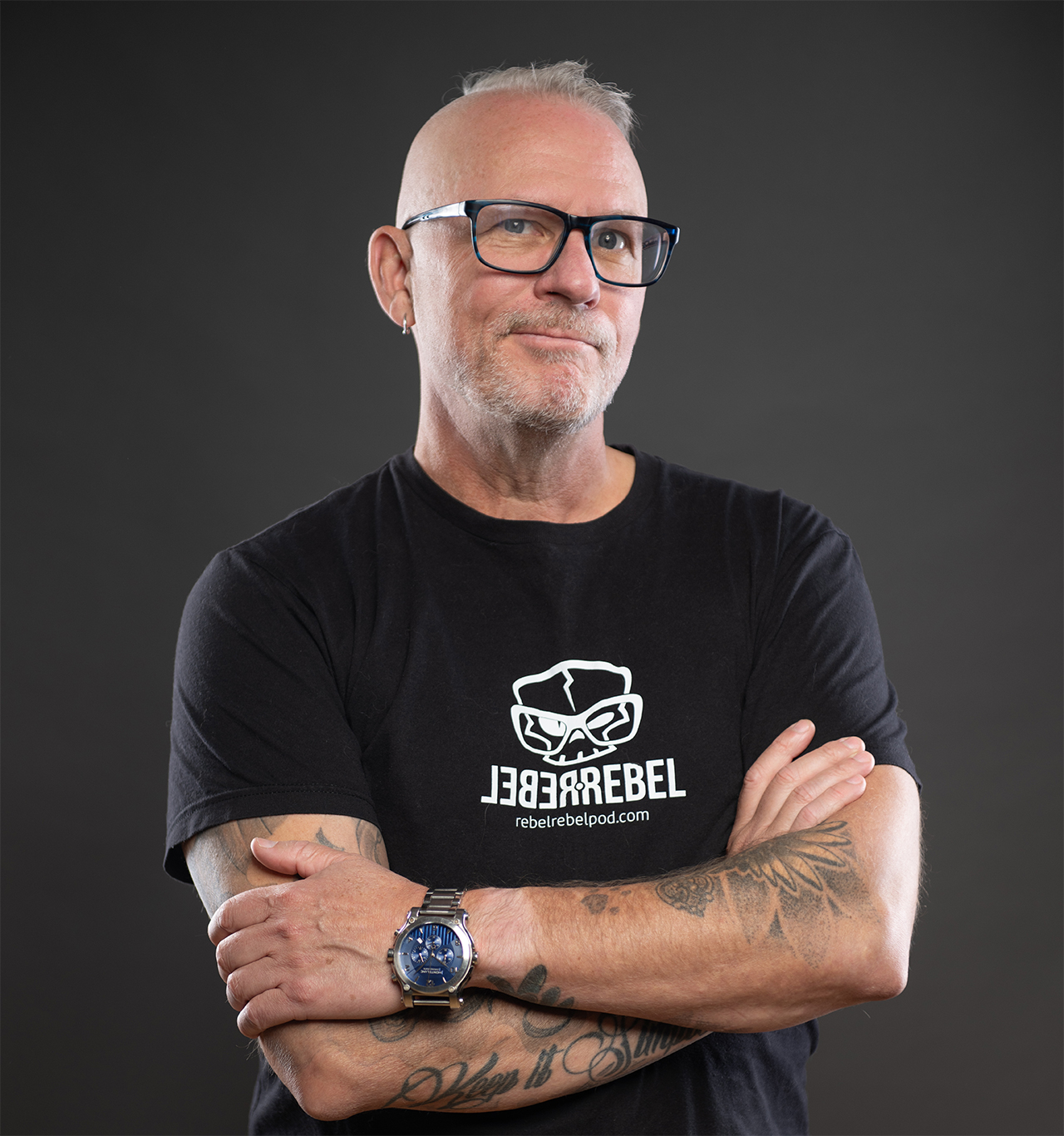
Michael Dargie is a creative strategist, entrepreneur, and the voice behind the RebelRebel Podcast. He founded Make More Creative, a creative agency helping brands stand out in a noisy world, and authored BrandJitsu™: Move Your Brand From 'Meh' To Memorable. A motorcycle rider, scuba diver, octopus whisperer, artist, writer, director, and adventurer — Michael brings a deep curiosity and genuine warmth to every conversation. He believes the best stories come from people who dare to do things differently, and he has spent nine seasons proving it.