Rebel Spotlight Corey Croft, Writer
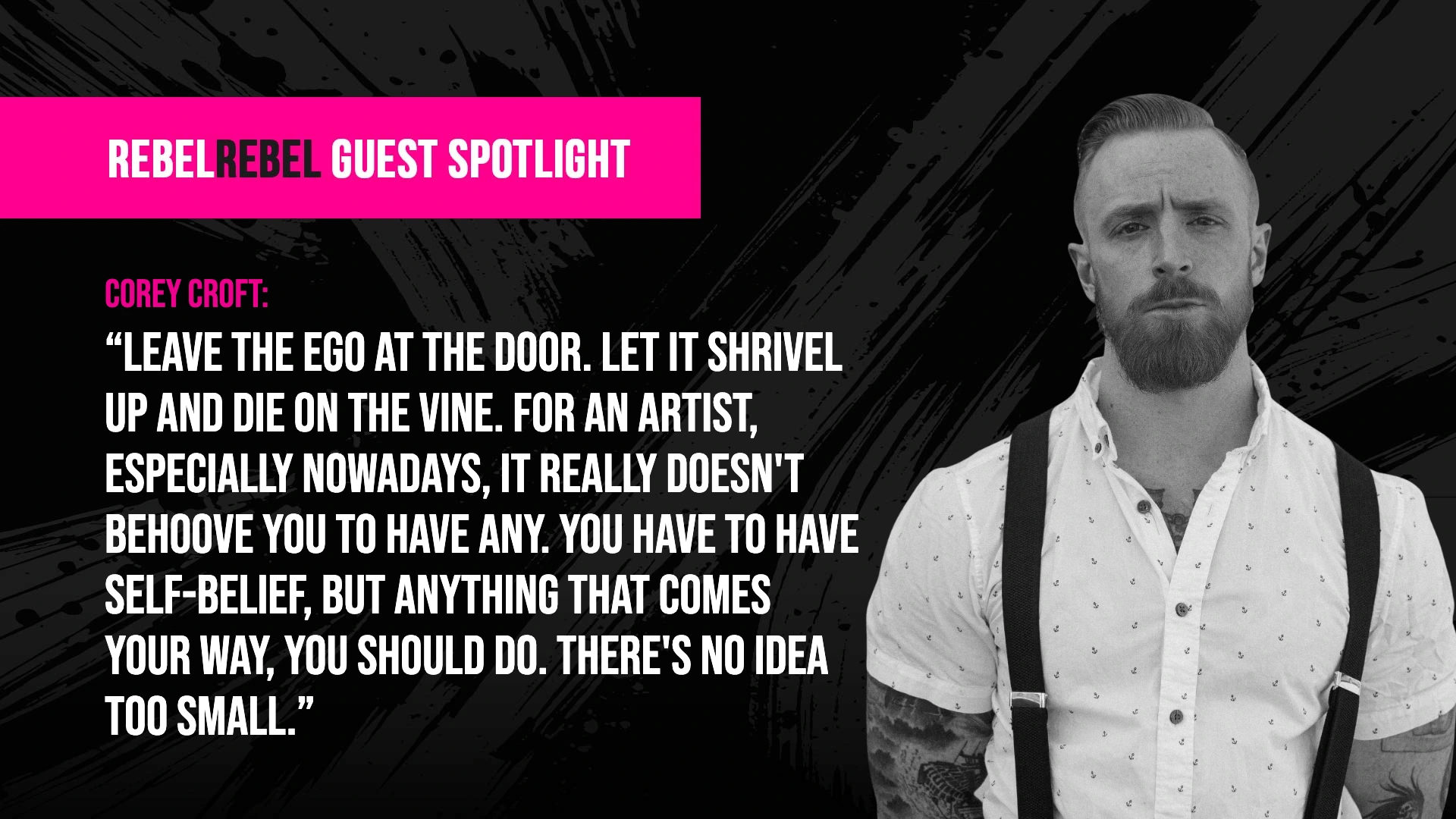
There's a bench somewhere near the beach in Vancouver's West End. It catches a perfect beam of light at just the right angle. Everything goes soft and orange. Corey Croft walks down from his apartment, grabs a coffee, maybe a soda water, maybe a cigarette, and goes to sit on that bench to read.
If someone else is already there, he just walks the block again and comes back.
That detail right there is everything you need to know about Corey Croft. Patient, deliberate, a little solitary, deeply in love with the ritual of it. He's a Vancouver-based indie author and the founder of Fly Pelican Press, a boutique publishing house he runs himself. He's got a new novella coming out called France Versus Brazil 98, a literary fiction piece with an existential slant he describes as somewhere in the territory of Camus and Sartre. And he has eight more books in a series already written, with plans for ten total.
The man is not messing around.
How a Community Bulletin Board Changed Everything
Corey didn't start writing because he had a plan. He started because he was struggling. Depression, anxiety, a girlfriend who (very gently) suggested he go talk to someone other than her. He tried therapy. The first session was free. The therapist started asking about his childhood and Corey, being Corey, thought: this isn't going to fix anything happening right now.
Then he was wandering through a community centre, eyes drifting the way eyes do when your brain is somewhere else entirely, and he spotted a notice on a bulletin board. Write a thousand words a day for a month.
Not NaNoWriMo. Just a handwritten note with a couple of thumbtacks in it.
"I was like, that's a really good way to get started," he told me. So he sat down to do it. And the first day, he had nothing. Absolutely nothing. Years had passed since those bright university years when he'd had big ideas and told himself he'd write them down when he had time. The colour had drained out a bit. The confidence with it.
But he made himself do the thousand words anyway. And then he did it again. And again. And the first book he ever wrote became a novel he genuinely loves, even if it wasn't the first one he published. He describes the process as wrapping a narrative around the hard stuff. A cocoon, he said. You put the difficult things inside, and you let something else out the other side.
"Writing became therapy," he said. "And I can see the differences in my personality, in my day-to-day life. The man that I've become, I owe exclusively to digging inside the difficult parts."
The Ego Has to Go
One of the things I appreciated most about talking to Corey is that he has no patience for artistic vanity. Not the performed kind of humility either, where someone says they're just a regular guy and you can tell they don't quite believe it. He means it.
When I asked him what advice he'd give aspiring writers, he didn't talk about craft first. He talked about ego.
"Leave the ego at the door. Let it shrivel up and die on the vine. Get swept away by someone's shoulders as they pass by." (That image is so specific and so good. I wrote it down immediately.)
He's not saying don't have self-belief. He's saying that the ego, the part that monitors whether it's working or judges whether it's worthy before it's even on the page, that part has to go quiet. Otherwise you're strangling the thing before it breathes.
He also talks about time with zero sympathy for excuses. Everyone he meets finds out he's an author and says they've got a great idea but no time. Corey's response is simple: you have the time. You're just deciding not to use it. He figured that out himself on a day off, digesting lunch, watching YouTube, and realizing that the couch he was sitting on was just unconverted time.
What Dostoyevsky Did to Him on a Megabus
Every writer has the book. The one that cracked them open. For Corey Croft, it was Crime and Punishment, read on a Megabus from Montreal to Toronto.
"That was the moment when I stopped looking at things and let things permeate into me and touch my heart."
He talks about Dostoyevsky the way some people talk about a religious experience. Like something shifted and stayed shifted. You can hear it in how he approaches his own work. He's not writing genre fiction to hit a market. He's writing literary fiction with an existential slant because that's what moves him. The new novella, France Versus Brazil 98, is the kind of book he'd want to read. Small, serious, strange, and genuinely pondering what it means to be alive.
Fly Pelican Press and the Indie Life
Corey doesn't just write. He publishes. Fly Pelican Press is his, entirely. That means he controls the books, the covers, the timing, the whole thing. It also means he does everything himself, which is its own kind of discipline.
He treats writing like a job with structure. Stephen King's On Writing was an influence there. On work days, he gets up, trains, comes home, gets dressed properly (he's very specific about this, you don't sit down to work in your pyjamas), and writes through to lunch. On days off, he treats it like an eight-hour shift. Lunch break included.
By night, he freely admits his attention span is roughly equivalent to a jellyfish. So he works during the day and saves the late nights for the occasional rebellious stretch when you don't know how long the session is going to last and that's part of the fun.
He's on Instagram only. Not TikTok, not really Facebook. Just the one platform, with enough focus to do it well. When he tried TikTok, he had what he called "one of those few moments when you sit back and go, oh, I'm old."
Why the Freaks Matter
There's a thread running through everything Corey talks about, and it's this: the people who are a little broken, a little weird, a little resistant to being sanded smooth are the ones worth paying attention to.
He worries about homogeneity. About a world that loves easy answers and quick fixes for hard problems. About algorithms and pods and the slow willingness to outsource our discomfort to anything that will take it off our hands. He referenced The Matrix, not as a tired metaphor but as a genuine concern about which generation is the one that just climbs in and doesn't look back.
"I love the freaks," he said. "The freaks make up the world. Without them, everything would just be Stepford Wives. Everybody mowing their lawn in the same direction."
His closest friends, the people he actually loves, are the ones with defects. With edges. With the kind of specific weirdness that comes from not having been smoothed out. That's not a pose for Corey. It's a genuine philosophy, worked out over years of depression and writing and long walks to a bench that might already have someone sitting on it.
The Stories Still in His Head
The anxiety and depression are still there, he says. A bear trap around the ankle. But what gets him out of bed, beyond the mechanical routine that keeps everything running, is the stories. He has a series. Ten books planned. Eight already written. He's not done.
"It's the connective tissue between me and the world," he told me. "To sever that would be to watch the planet float away like a leaf on a lake."
There's no grand ambition in the way he says it. No talk of legacy or fame or bestseller lists. Just: there are things in his head that want to be written, and writing them is what keeps him tethered to the whole enterprise of being alive. That's a pretty honest thing to say, and not everyone has the courage to say it.
Corey Croft is the kind of writer who found his way to the page sideways, through pain and a thumbtacked bulletin board and a Russian novel on a bus. He built his own press, kept his ego in check, and kept walking back to that bench even when someone else was sitting on it.
That's the kind of rebel I like talking to.
Catch the full conversation with Corey Croft on The Rebel Rebel Podcast, where we get into ego death, Dostoyevsky on a Megabus, the horror of not being able to stop reading a terrible book, and what he actually wishes people understood about the world.
This article is based on
Writing Through The Darkness with Corey CroftAbout the Author: Michael Dargie
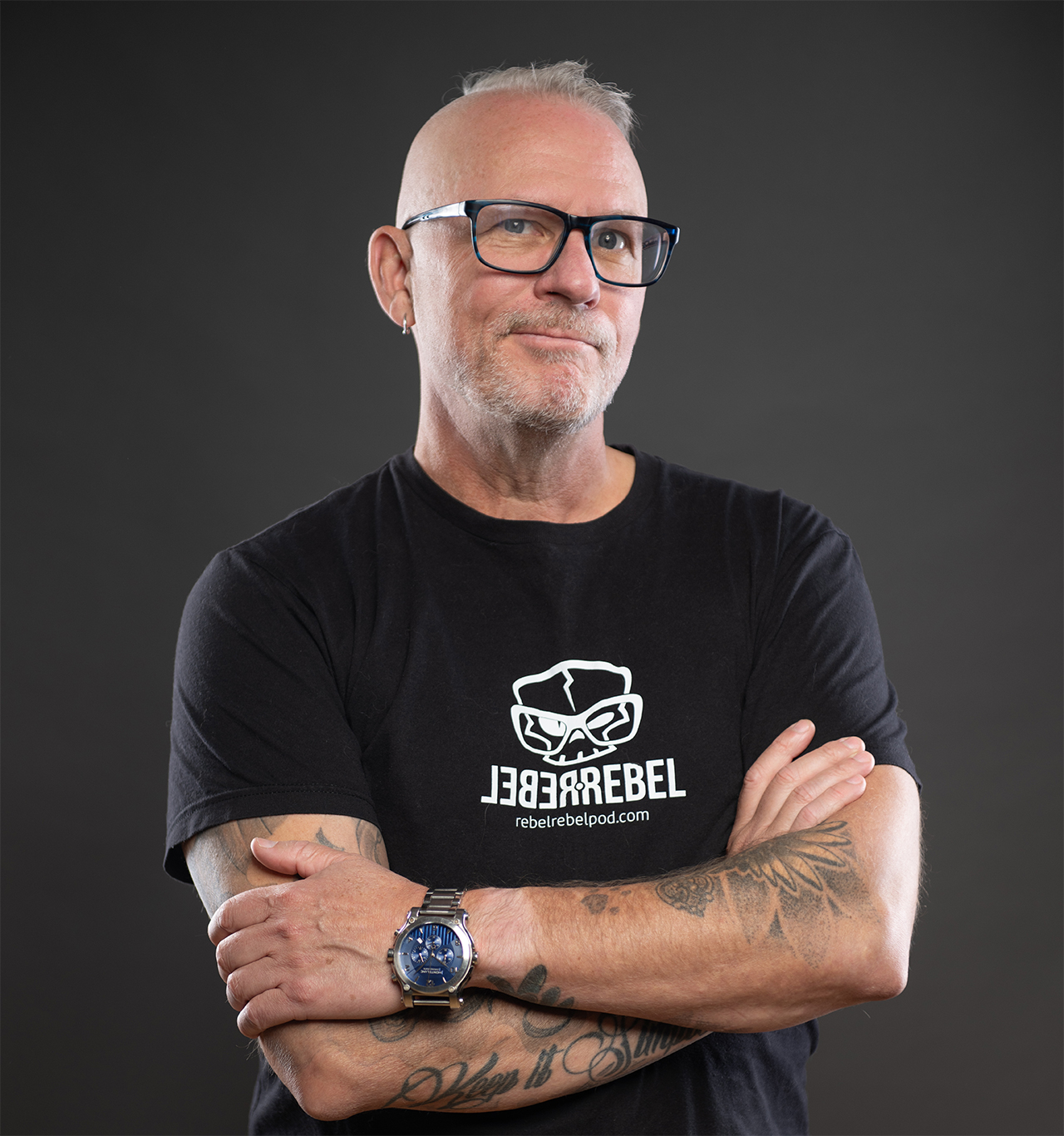
Michael Dargie is a creative strategist, entrepreneur, and the voice behind the RebelRebel Podcast. He founded Make More Creative, a creative agency helping brands stand out in a noisy world, and authored BrandJitsu™: Move Your Brand From 'Meh' To Memorable. A motorcycle rider, scuba diver, octopus whisperer, artist, writer, director, and adventurer — Michael brings a deep curiosity and genuine warmth to every conversation. He believes the best stories come from people who dare to do things differently, and he has spent nine seasons proving it.