Rebel Take-Aways From Compassionate Business Expert Dr. Bruno Cignacco

Bruno Cignacco teaches at universities across London, consults businesses around the world, and wrote a 450-page book called The Art of Compassionate Business. He also, apparently, never got the Batman car he wanted as a kid. We covered a lot of ground.
Here are the things that stuck with me.
Put People First and Profit Follows (Not the Other Way Around)
Bruno made this point early and he made it clearly. When companies chase profit as the primary goal, they tend to get there by ugly means: manipulating customers, squeezing employees, cutting corners on the environment. But when you put people first, the numbers follow anyway.
He's not just saying this because it sounds nice. There's science behind it. Studies on what researchers call "compassionate workplaces" show higher employee satisfaction, higher customer satisfaction, lower absenteeism, and stronger productivity. The profit doesn't disappear. It just arrives through a door you weren't expecting.
Stop Treating Customers Like Database Entries
Bruno described a scenario where two companies sell identical products at identical prices. The one that wins? The one that treats each customer as a unique human being with specific needs, not a number contributing to quarterly targets. That company earns loyalty. It earns referrals. It earns what Bruno called an "unpaid ambassador."
And here's the part that really landed: if that company doesn't carry what the customer needs, a truly compassionate business will point them toward a competitor who does. That sounds counterintuitive until you realize the customer never forgets that kind of honesty.
Micromanagement Is Just Expensive Distrust
Bruno said something that I think every manager needs to hear out loud. When you micromanage people, you're essentially telling them they can't be trusted. You're treating them like naughty children. And research backs this up: micromanaged employees disengage. They stop bringing ideas. They work by the book and nothing more.
Employees aren't just motivated by a good salary. They need autonomy, recognition, support, and the occasional sense that someone actually sees them. When you give people that, they tend to give you creativity and cooperation in return. Withhold it, and they withdraw. Simple as that.
Make Space for Conversations That Aren't About Business
This one felt almost radical for how obvious it is. Bruno talks about what he calls "natural conversation," and his suggestion is straightforward: before any business meeting, spend five minutes asking how someone's weekend was. Ask about their family. Be a human for a moment before becoming a colleague.
He goes further and recommends companies hold monthly social gatherings with no agenda, no hierarchy, no KPIs being discussed. Just people getting to know each other as people. (I'll be honest, the number of companies that do this even once a year is already pretty thin.) The research shows that employees who connect outside their roles come back to work more revitalized, more creative, and more willing to actually talk to each other. Who knew.
Fear Is the Obstacle. You Are the Obstacle.
When I asked Bruno what advice he'd give to someone about to do something scary and new, he didn't reach for a motivational poster. He talked about immersion. Gradual, deliberate immersion.
He remembered his first teaching session 30 years ago, shaking behind a lectern, absolutely terrified. His answer wasn't to power through with bravado. It was to take one small step, then another. Gather some information. Talk to one person. Build a small win. Then a slightly bigger one. He called it self-efficacy: that quiet inner voice that starts saying "I could do this" once you've done a few smaller versions of this. The fear doesn't disappear. You just outgrow it one step at a time.
Learning Is a Lifelong Posture, Not a Phase You Graduate From
Bruno reads multiple books a week. He mentioned Warren Buffett and Bill Gates as people who have everything they could possibly need, and still read voraciously. His point wasn't to brag about his reading habits. It was that genuine learning keeps you humble.
Every time he reads something and thinks "I wish I'd thought of that," it reminds him how much he doesn't know. That humility, he argues, is actually a competitive advantage in business. People who think they've figured it all out stop listening. People who stay curious keep getting better. Bruno's been teaching for 30 years and he's still in the front row.
Shared Humanity Is the Real Networking Strategy
Bruno works in international marketing and has traveled extensively. One thing he keeps noticing, across cultures and countries and industries: underneath all the differences, humans share the same worries, dreams, and need to be seen. He calls it "common humanity."
In business, we tend to connect only through our roles. I'm the manager. You're the client. I'm the supplier. You're the buyer. But Bruno argues that when you connect to someone as a fellow human first, the business relationship that follows is just fundamentally stronger. The rapport is real. The communication means something. And the relationship tends to actually last.
It's the same reason he suggests learning about local customs when you travel, not to perform cultural awareness, but to genuinely imagine the world through a different lens. That practice, he says, makes you a better business person. It also just makes you a better person.
Bruno's based just outside London in Watford, planning a trip to Egypt, and still a little bitter about the Batman car. Catch the full conversation with Dr. Bruno Cignacco on The RebelRebel Podcast.
This article is based on
Bruno Cignacco and Profit With A HeartAbout the Author: Michael Dargie
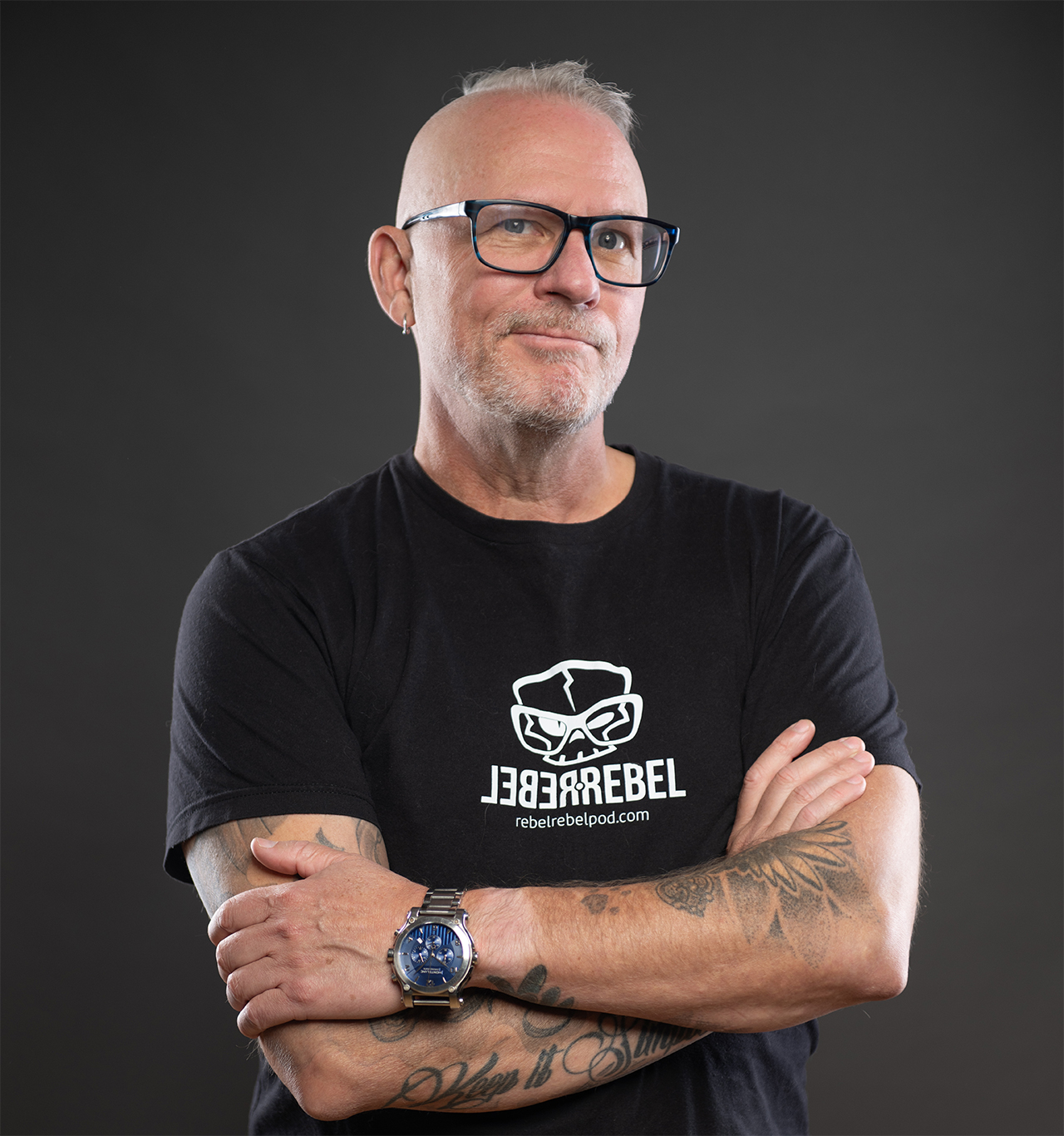
Michael Dargie is a creative strategist, entrepreneur, and the voice behind the RebelRebel Podcast. He founded Make More Creative, a creative agency helping brands stand out in a noisy world, and authored BrandJitsu™: Move Your Brand From 'Meh' To Memorable. A motorcycle rider, scuba diver, octopus whisperer, artist, writer, director, and adventurer — Michael brings a deep curiosity and genuine warmth to every conversation. He believes the best stories come from people who dare to do things differently, and he has spent nine seasons proving it.