Rebel Spotlight: Mark Gillilan Botanical Wellness Founder
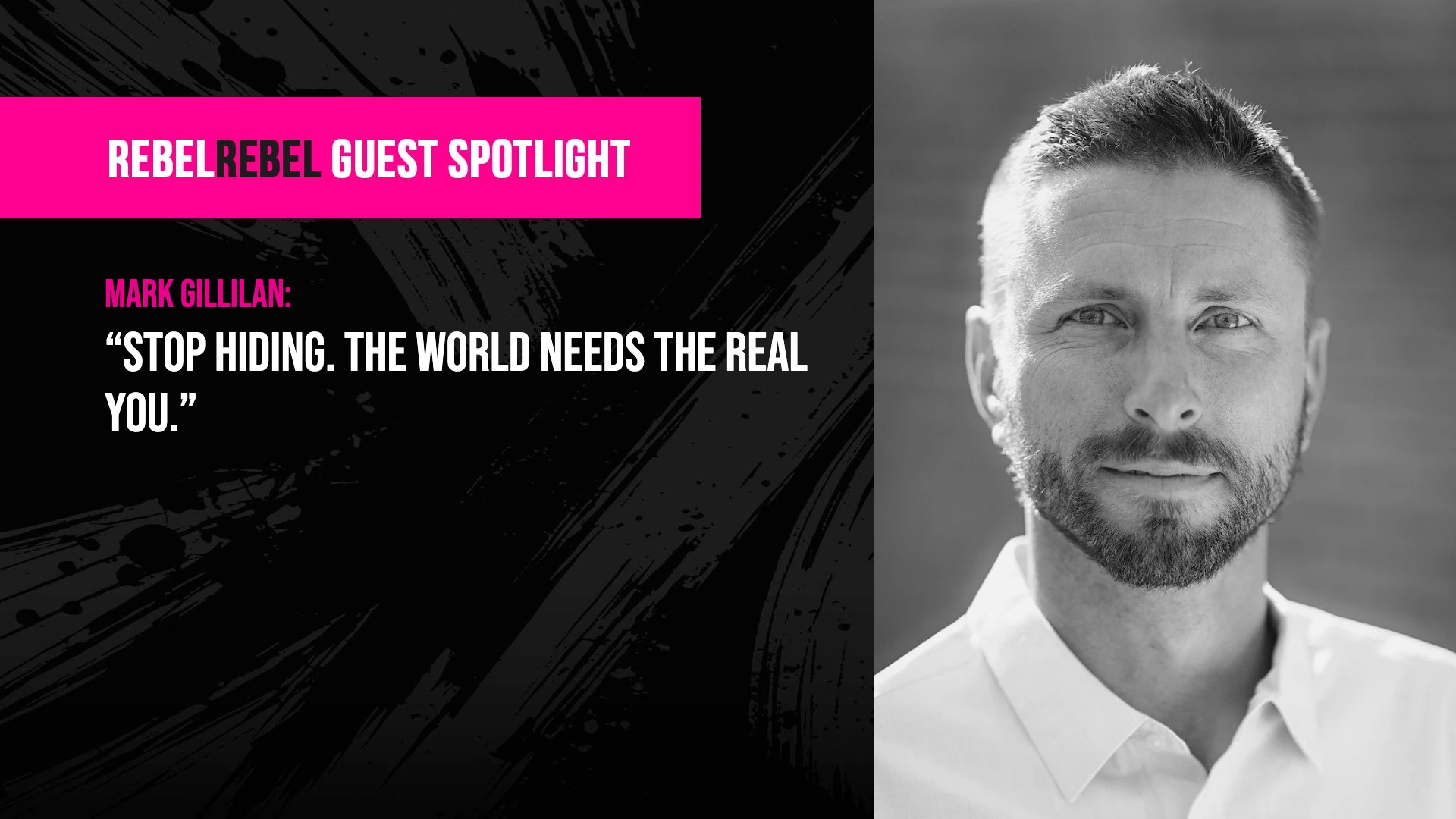
Mark Gillilan once picked up a baby cottonmouth with his bare hands. It bit him. He didn't tell anyone. And the scar is still there on his knuckle, decades later.
I'm not saying that's a metaphor for how he runs a business. But I'm not not saying that either.
Mark is the founder of Kyoto Botanicals, a botanical wellness company built around hemp-derived CBD and, more recently, functional mushrooms. He's a former wildlife biologist who caught snakes in Dallas creeks as a kid, spent years in the corporate marketing world at places like Nestlé, got recruited to Charlotte's Web at the dawn of the CBD category, and eventually decided to go off on his own. He's also, by his own admission, deeply introverted. Which makes the fact that he now films YouTube videos of himself talking directly to a camera, every few days, genuinely impressive.
From Creek Banks to Charlotte's Web
Mark grew up outdoors. Not in a "we went camping twice" kind of way. In a "sunup to sundown, turning over rocks in a creek, catching anything that moved" kind of way. Biology was never a career choice so much as a foregone conclusion.
He went on to do helicopter surveys for wildlife projects. He built a career in consumer packaged goods. And then an old boss called with an offer to join Charlotte's Web, the company that more or less invented the CBD category.
He almost said no.
"I wasn't like, oh my God, I have a chance to work in cannabis, this is awesome," he told me. "I actually had serious reservations about it."
He took the job anyway. And within a week, he was done. Not done as in finished. Done as in, this is what I'm doing forever. He met the original families. He met Charlotte Figi. He saw up close what the plant could actually do for people, and the gap between that reality and the decades of propaganda that had surrounded cannabis snapped into focus fast.
"It truly is an incredible plant," he said. "And it's one of many out there that we just haven't even started to scratch the surface of."
Why He Started Kyoto Botanicals
The name Kyoto Botanicals was deliberate from the start. Mark never wanted to be just a CBD company. He wanted room to grow, to add functional mushrooms, to follow the science wherever it led. (He expanded into mushrooms about two months before we spoke, six years after launching. Patience is apparently also a skill he picked up in those creek beds.)
The company is rooted in a belief that most of us have been sold a maintenance-free approach to our own health. Take a pill when something goes wrong, rather than doing the quieter, less dramatic work of daily wellness. Mark is trying to nudge people toward that quieter work.
"I think people are starting to get a lot more aware of their day-to-day wellness," he said, "and the choices they're making on a daily basis that can help just support their wellbeing and balance."
He's not preachy about it. He's more like the guy at the farmers market who genuinely lights up when he gets to talk about this stuff. Which, as it turns out, is exactly what he was. For years, Kyoto Botanicals lived at local markets and street fairs, and Mark loved it. The problem was scale.
The Hiding Problem
Here's where it gets interesting. Mark spent years running Kyoto Botanicals like a proper CPG brand. Structured. Polished. Faceless, in the way that many product companies are. And there was a nagging feeling he kept suppressing.
"My differentiator in the category was me," he said. "How I felt about it, what I knew about it, my unique voice. But I kind of suppressed it for a long time."
A few months before we talked, he made a decision. He stopped hiding. He put his name everywhere. He started writing all the blog posts himself. He redesigned the homepage based on what he wanted people to experience, not what a brand framework said he should want. And he started filming YouTube videos.
The first one was, by his own account, catastrophic. "I accidentally watched it yesterday and it is so bad," he said, laughing. "I was like a robot just reading from a script."
He kept going anyway. He forced himself to do thirty days. By day five or six, he said, he stopped being nervous. Now he just turns the camera on and talks.
"Don't hide yourself," he told me. "That's the reason why what you're doing is important. That's why it matters to you. And that's eventually why it will matter to the world."
There's something else he said that stuck with me. He talked about two kinds of fear that live on opposite ends of the same thing. The fear of failure, sure. But also the fear of success. The fear that people might actually care. "What if everybody cares?" he said. "Oh my God." He wasn't joking. That one, he said, can be even harder to sit with.
The Lows Nobody Warns You About
I asked Mark what surprised him most about running his own business. He went quiet for just a second, and then he talked about the emotional range of it in a way that felt genuinely honest.
"There's no high higher than a successful whatever you do," he said. "And then the lows are like no other lows in life. Just the terror and the fear and the anxiety and the up all night."
He said nobody really prepared him for how fast you can swing between the two. A great day of sales. A quiet stretch where nothing's working. The same person, the same business, just days apart.
His answer to managing it? Get outside. Walk the dog. Go for a run. Sit in the sun for three minutes if that's all you've got. He's not selling anything with that advice. It's just what actually works for him.
The Man Behind the Brand
Mark cooks all the dinners in his house. He makes bread, tortillas, naan, pita. He attempted sourdough once, declared it delicious and deeply unrepeatable, and moved on. He goes camping with his kids in a way that sounds less like recreation and more like a genuine reset, fewer distractions, no agenda, more connection in two days than in a whole busy month.
He's been rock climbing indoors with his son for two years and is heading to Moab for some outdoor bouldering. He reads Ed Yong's An Immense World (a book about how differently animals perceive reality) and finds it humbling in exactly the right way. He thinks about grace more than he used to, partly because he's got a nearly-fifteen-year-old and a nearly-twelve-year-old, and watching them be hard on themselves has a way of holding up a mirror.
"Have a little grace with yourself," he said. "Be patient with yourself. Celebrate the things you're doing well."
He was clear that this is something he's still working on. Which is probably why it landed so well.
Why Mark Gillilan Is a Rebel
Mark didn't blow anything up. He didn't quit a job dramatically or make a scene. His rebellion was quieter than that. He spent six years building something the safe way, the structured way, the way Nestlé would have recognised. And then he stopped. He put his own name on it, his own face, his own voice. He chose to be a person instead of a brand.
In a world where every small company is trying to look like a big one, that actually takes guts.
The cottonmouth scar on his knuckle is from picking up something dangerous because he was curious and fearless and young enough not to know better. The YouTube channel is from doing something scary because he finally decided the cost of hiding was higher than the cost of being seen.
Not that different, really.
Catch the full conversation with Mark Gillilan on The RebelRebel Podcast, where we also get into functional mushrooms, helicopter surveys, the terror of sourdough, and the specific kind of fear that comes from things actually going well.
This article is based on
Care Before You Cure with Mark GillilanAbout the Author: Michael Dargie
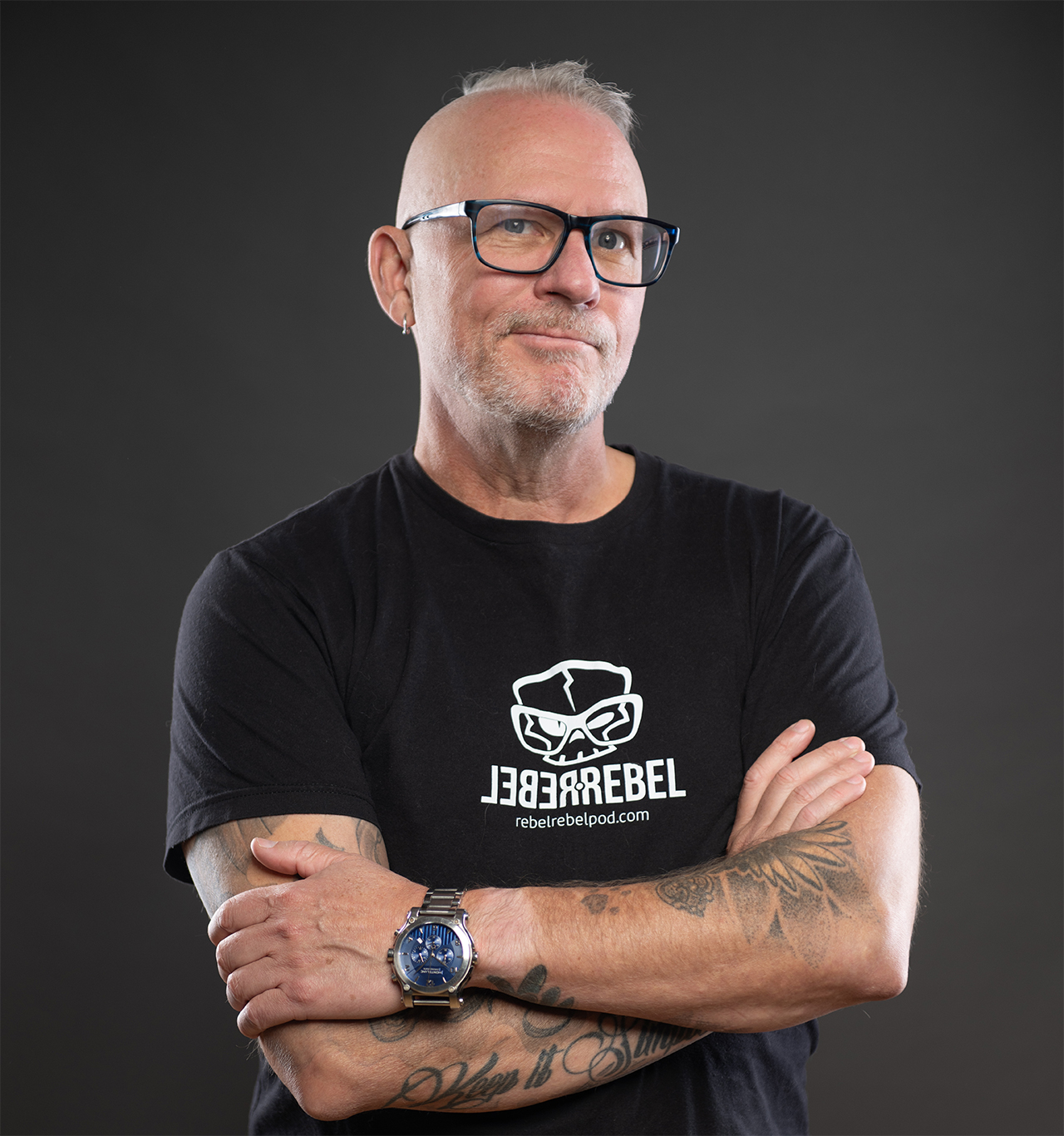
Michael Dargie is a creative strategist, entrepreneur, and the voice behind the RebelRebel Podcast. He founded Make More Creative, a creative agency helping brands stand out in a noisy world, and authored BrandJitsu™: Move Your Brand From 'Meh' To Memorable. A motorcycle rider, scuba diver, octopus whisperer, artist, writer, director, and adventurer — Michael brings a deep curiosity and genuine warmth to every conversation. He believes the best stories come from people who dare to do things differently, and he has spent nine seasons proving it.